
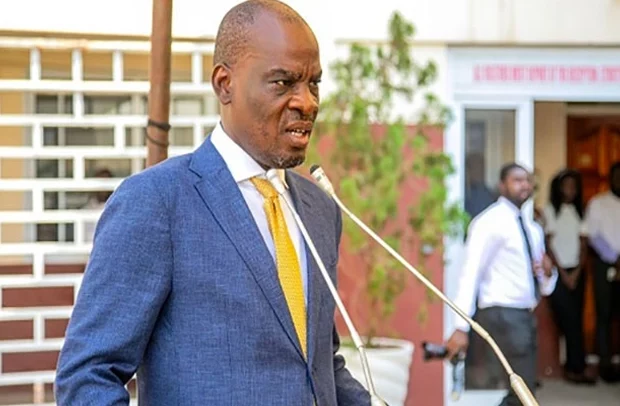
Haruna Iddrisu
The Minister for Education, Haruna Iddrisu, has announced that President John Dramani Mahama will, from January 1, 2026, formally declare education for all persons with special needs free in Ghana, describing the policy as a landmark social intervention aimed at protecting some of the country’s most marginalised citizens.
Contributing to a statement on the floor of Parliament yesterday, Mr. Iddrisu said the declaration was in line with the country’s international commitments to the rights and welfare of persons with disabilities, including global resolutions made under the auspices of the United Nations.
He recalled discussions at major global platforms such as the World Summit on Social Development in Doha, which reinforced the need for inclusive and equitable societies.
The Minister noted that despite global and national commitments, persons with disabilities in the country continue to face significant social, economic and infrastructural barriers.
He praised the government’s earlier introduction of free tertiary education for persons with disabilities, saying the new policy would deepen inclusion across all levels of special needs education.
He revealed that Ghana currently has about 39 special needs institutions across the country, particularly in the Ashanti and Volta regions and other parts of the country, where feeding grants for beneficiaries stand at about GH¢8 per day.
The government, he said, has approved an increase of the daily feeding support to GH¢15.
To provide a firm legal and financial backing for the policy, Mr. Iddrisu disclosed that his ministry would be laying before Parliament an amendment to the Ghana Education Trust Fund (GETFund) Act to formally guarantee free special needs education.
As part of the amendment, he stated that Parliament would be required every two years to approve a minimum allocation of between GH¢65 million and GH¢100 million from GETFund specifically for the feeding of learners in special needs institutions.
Beyond tuition and feeding, the Minister said the government would also prioritise the provision of assistive devices for learners with disabilities, particularly hearing aids and other specialised equipment used internationally to support persons with hearing and visual impairments.
Mr. Iddrisu further disclosed that President Mahama has directed an increase in the District Assemblies Common Fund allocation for persons with disabilities from three per cent to five per cent, with a strict requirement that the funds be utilised at the local level.
He said access to the fund would involve the Federation of Disabled People to ensure transparency and proper targeting.
While commending earlier contributors to the debate, Mr. Iddrisu admitted that many institutions in Ghana, including Parliament itself, remain disability-unfriendly due to poor infrastructure.
He stressed the urgent need for reforms to guarantee full accessibility for persons with disabilities as the country moves toward a more inclusive education system.
By Ernest Kofi Adu, Parliament House