
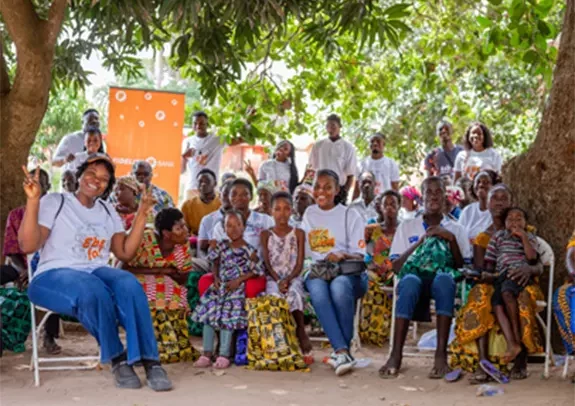
Some staff of Madina Branch with residents of Gbantana, Ada, during the outreach
Fidelity Bank Ghana is deepening its commitment to inclusive development with the rollout of a nationwide portfolio of community interventions designed to restore dignity and promote long term empowerment, rather than offer short term festive relief.
The interventions, carried out in December 2025 as part of the bank’s end of year social impact programme, reached vulnerable groups including orphans, street connected children, persons with disabilities and widows across eight regions.
They combined staff led volunteering with strategic partnerships to deliver support in health, skills development, food security and access to basic essentials.
In all, the programme covered the Greater Accra, Ashanti, Western, Eastern, Bono, Volta, Upper West and Upper East Regions, with an estimated financial investment of about GHS290,985.
More than 33 staff volunteers contributed over 120 hours of service, reaching in excess of 3,000 beneficiaries nationwide.
Explaining the thinking behind the initiative, the Head of Sustainability, Partnerships and Corporate Social Responsibility at Fidelity Bank, Nana Yaa Afriyie Ofori Koree, said the bank deliberately focused on interventions that empower people and communities.
“Our approach was intentional. We wanted to move beyond charity and design interventions that speak to dignity, inclusion and long term impact. Whether through healthcare access or skills development, the goal was to respond to real needs in ways that empower people and communities,” she said.
The programme was structured around four impact pillars aligned with the United Nations Sustainable Development Goals, namely health and inclusion, empowerment, zero hunger and access to essentials.
Under the health and inclusion pillar, Fidelity Bank partnered organisations such as the Hope In Sight Foundation to deliver medical eye screenings, shifting the focus from festive goodwill to preventative healthcare.
In the Eastern Region, the bank’s Legal Department also implemented the Smiley Hope initiative, which promoted meaningful engagement with children living with disabilities.
Empowerment initiatives were prominent in the Upper East and Upper West regions, where the bank supported the Scripture Union Community with vocational training and community engagement. Beneficiaries were equipped with practical income generating skills including liquid soap and perfume production.
Food security and access to basic necessities also featured strongly. In Tarkwa, Sunyani and Madina, Fidelity Bank branches distributed food items and sanitary products to widows and orphans, ensuring vulnerable households were not excluded during the festive season.
Beyond the numbers, the interventions highlighted personal stories that underscored the impact of inclusion. In the Eastern Region, staff encountered a student living with a disability who aspires to become a veterinary doctor, while in the Ashanti Region, a school dropout pledged to return to the classroom after receiving support and encouragement during a community carol service.
Reflecting on the programme, Nana Ofori Koree said sustainability requires consistency and attentive engagement with communities.
“These stories reaffirm why our CSR strategy prioritises people, partnership and purpose. The impact we seek is not seasonal; it is enduring,” she noted.
A business desk report