
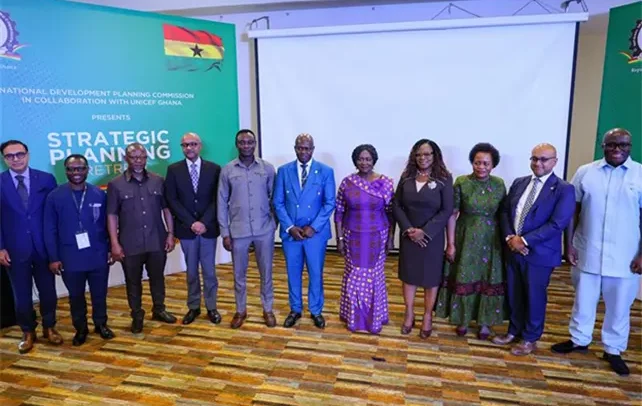
Prof. Naana Jane Opoku-Agyemang (M) in a group photograph with dignitaries
THE NATIONAL Development Planning Commission (NDPC) has successfully concluded a high-level Strategic Planning Retreat with key stakeholders and ministries to accelerate progress toward the Sustainable Development Goals (SDGs) for children.
Building on the 2025 Voluntary National Review, which highlighted Ghana’s resilient GDP growth of 5.7 percent, the NDPC convened leadership from various ministries, Metropolitan, Municipal and District Assemblies (MMDAs) as well as its development partners, including UNICEF Ghana, to address “last mile” challenges.
The retreat focused on seven critical priority areas designed to ensure that economic growth translates into well-being for every child. They include maternal and neonatal health, nutrition and sanitation, youth employment and child labour, adolescent protection, birth registration and social protection.
Vice President Professor Naana Jane Opoku-Agyemang, in her address, reiterated the widely accepted belief that children represent the cornerstone of Ghana’s future, hence the need to prioritise their rights, health, education, and general well-being.
“Ghana’s future is not a distant dream; it is embodied in the lives of the children we see around us today. Their health, education, and protection are not optional, they are fundamental rights and the cornerstone of sustainable and inclusive development.
Planning for children and young people should become front and centre of our development strategy, and I believe that this retreat has helped reset our collective approach to delivering outcomes for children,” she stated.
Prof. Opoku-Agyemang issued a clarion call to public and private sector agencies and institutions, along with religious bodies and civil society organisations, urging them to adopt measures and policies that place children’s welfare first and ensure their holistic well-being.
She also charged the NDPC to institute measures to track the implementation of the commitments made at the retreats.
A key outcome of the retreat was the government’s commitment to a “Network of Practice” model. This approach integrates health, nutrition, and social protection services into a unified safety net, specifically targeting adolescent girls as a catalyst for systemic change.
UNICEF Representative in Ghana, Mr. Osama Makkawi Khogali, said as a key partner in this process, “We are not just identifying problems; we are committing to solutions; from reducing the number of young people out of school to ending child marriage, our partnership with the Government of Ghana is focused on high-return investments that will yield benefits for generations to come.”
The strategic outcomes of the retreat are set to be fully integrated into the national budgeting and policy cycle, ensuring child rights remain the cornerstone of Ghana’s journey toward 2030.