
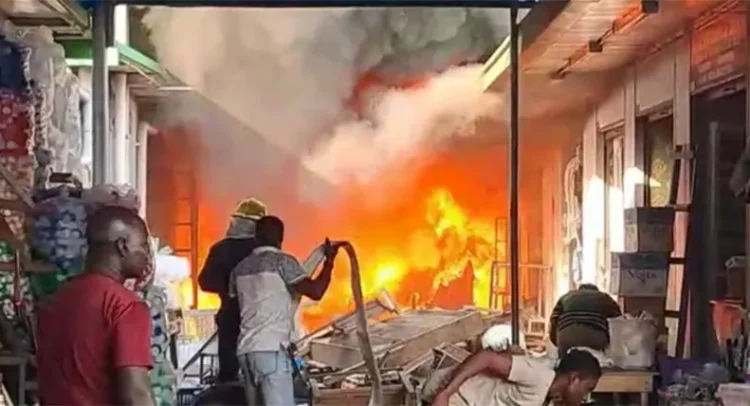
The Ashanti Regional Coordinating Council has raised serious concerns over the increasing number of fire outbreaks recorded across the region, with data from the Ghana National Fire Service (GNFS) indicating that 125 fire incidents occurred between January 1 and 28, 2026.
The Ashanti Regional Minister, Dr. Frank Amoakohene, in a statement, described the situation as worrying, noting t the frequent fire outbreaks pose a significant danger to human lives, businesses, properties, and the region’s economic activities, particularly as the dry season intensifies.
According to him, the high number of fire incidents recorded within a short period highlights the urgent need for residents, traders, institutions, and other stakeholders to take proactive measures to reduce the risk of fire outbreaks.
The minister disclosed that the incidents reported within the period comprised various categories, including market fires, residential and commercial fires, industrial and vehicular fires, as well as bush and other outdoor fires.
He explained that the prevailing dry season, which is associated with intense heat and strong winds, has contributed to the rapid spread of fires, often escalating minor outbreaks into major disasters.
Dr. Amoakohene expressed particular concern about the recurring fire outbreaks in major markets across the region, noting that markets remain vital centres of commerce and sources of livelihood for many families. He stressed that market fires often wipe out traders’ goods and investments, leaving victims financially devastated and worsening poverty levels while affecting economic productivity.
The Regional Minister also highlighted the increasing incidents of bush fires, attributing them to uncontrolled burning, unsafe farming methods, and the careless disposal of burning materials. He warned that such fires pose serious threats to farmlands, forest reserves, residential areas, and critical public infrastructure, especially under dry and windy weather conditions.
While commending the Ghana National Fire Service for its swift and professional response to emergencies, Dr. Amoakohene admitted that the damage caused by the fires continues to have severe consequences for families, traders, businesses, and the local economy.
Preliminary findings by the Fire Service, he noted, suggest that many of the outbreaks are preventable and are often linked to electrical faults, illegal power connections, substandard wiring, poor handling and storage of flammable materials, and the unsafe use of open flames for cooking and lighting in crowded environments.
He therefore urged residents, traders, and business operators to strictly observe fire safety measures, particularly during the dry season. He advised the public to ensure regular inspection of electrical installations, adhere to safety protocols, avoid indiscriminate burning, and promptly report potential fire hazards to authorities.
Dr. Amoakohene emphasised that preventing fire outbreaks should not be left solely to the Fire Service, stressing that residents must collectively take responsibility to safeguard lives and property.
Authorities in the region are expected to intensify public education, strengthen enforcement of safety regulations, and deepen community engagement efforts to curb the rising incidence of fires and protect the socio-economic wellbeing of residents in the Ashanti Region.
FROM David Afum, Kumasi