
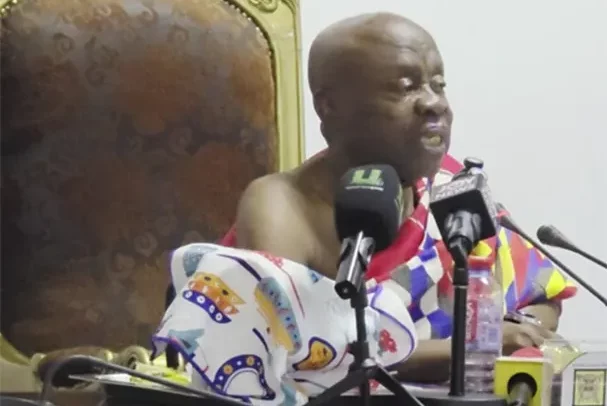
Ogyeahoho Yaw Gyebi II
The National House of Chiefs has called on the government to implement permanent and practical measures to address Ghana’s recurring flooding problem following the recent devastating floods that claimed at least 19 lives and caused widespread destruction.
The appeal comes in the wake of a 48-hour torrential downpour that inundated Accra, Tema and parts of several other regions, leaving men, women and children dead, displacing thousands of residents and destroying homes, businesses and other properties.
The disaster also prompted a major rescue operation involving the National Disaster Management Organisation (NADMO), the Ghana Armed Forces, the Ghana Police Service and the Ghana National Fire Service, which worked together to evacuate stranded residents from affected communities.
Addressing members of the National House of Chiefs at a meeting in Kumasi on Thursday, July 2, 2026, the President of the House, Ogyeahoho Yaw Gyebi II, expressed condolences to families who lost their loved ones and wished those injured a speedy recovery.
Describing the persistent flooding as a major national challenge, he said the recurring loss of lives and destruction of property whenever heavy rains occur should no longer be accepted as a seasonal phenomenon.
Ogyeahoho Yaw Gyebi II urged the government to move beyond emergency responses by investing in sustainable flood control systems, expanding and maintaining drainage infrastructure, and strictly enforcing planning and building regulations to minimise future disasters.
He stressed that finding a lasting solution to the flooding menace requires a coordinated effort involving government agencies, metropolitan, municipal and district assemblies, traditional authorities and the public to protect lives, property and the environment.
The President of the National House of Chiefs expressed confidence that with strong political commitment and effective collaboration among all stakeholders, Ghana could significantly reduce the impact of floods and prevent the recurring loss of lives and property.
FROM David Afum, Kumasi