
Mohammed-Mubarak Muntaka
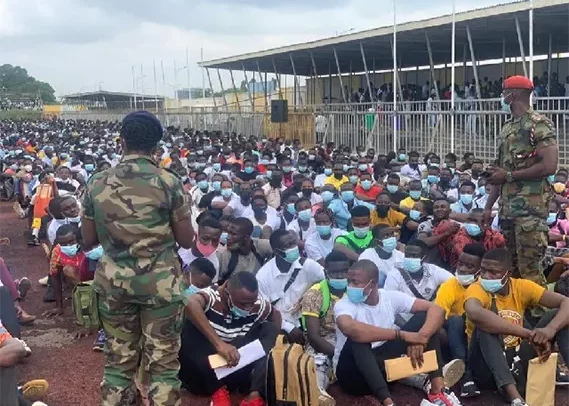
About 1,300 applicants who underwent medical screening during a recent security services recruitment exercise were found to be living with HIV, Minister for the Interior, Mohammed-Mubarak Muntaka, has disclosed.
The minister revealed this when he appeared before Parliament’s Government Assurance Committee yesterday, explaining why the government does not directly communicate medical screening results to candidates who are disqualified during recruitment exercises.
According to him, the decision is guided by medical and ethical considerations, particularly in cases involving sensitive health conditions such as HIV and Hepatitis B.
Mr. Muntaka said the government considered sending individual medical results to unsuccessful applicants but abandoned the idea after recognising the potential psychological impact of informing someone they had tested positive for HIV without prior counselling.
“I remember during the recent recruitment we had about 1,300 or so who were on HIV. The question was whether we should simply send them their results telling them they have HIV. That is not the procedure because the person has to go through some orientation and counselling,” he told the committee.
Instead, he explained, candidates who fail the medical examination are informed that they have been disqualified and are provided with contact details to seek further information if they wish to know the reasons for their disqualification.
He said medical personnel then provide the necessary counselling before disclosing the findings.
The Interior Minister noted that many of the medical conditions leading to disqualification are treatable, urging affected candidates to seek clarification rather than abandoning any future ambition of joining the security services.
He cited conditions such as Hepatitis B, certain cardiac conditions, mental health disorders and complications from major surgeries, explaining that some can be treated or managed, enabling affected persons to qualify in future recruitment exercises.
“Some people may not even know they have mental health issues. Some of these conditions are treatable, so we encourage everybody who is disqualified to find out why, because knowing the cause will help them seek treatment and possibly qualify during subsequent recruitment,” he stated.
Mr. Muntaka added that the government’s approach is also consistent with international health protocols, noting that World Health Organisation guidelines discourage disclosing sensitive diagnoses such as HIV without appropriate counselling.
Chairman of the Government Assurance Committee and Member of Parliament for Bimbilla, Dominic Nitiwul, urged the Interior Ministry to strengthen efforts to ensure candidates diagnosed with HIV are properly informed through counselling.
Drawing from his experience as a former Defence Minister, Mr. Nitiwul said affected applicants should not be left unaware of their status because of the potential public health implications.
He stressed that people living with HIV can lead normal lives if they receive early treatment and adhere to prescribed medication, adding that timely diagnosis would also help prevent further transmission of the virus.
Mr. Nitiwul warned that failing to notify affected individuals could result in more infections, describing the number of HIV cases detected during the recruitment exercise as “huge” and “scary.”
By Ernest Kofi Adu, Parliament House