
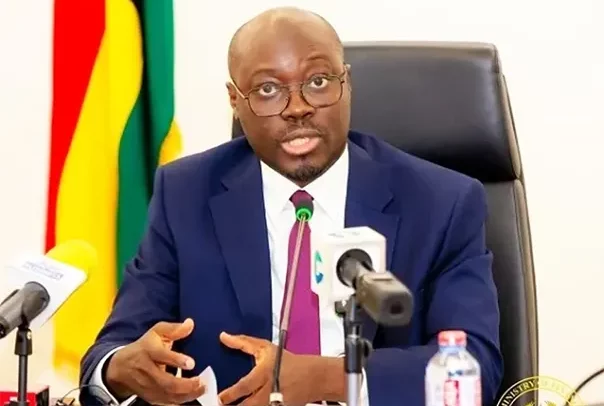
Dr. Cassiel Ato Forson
Parliament has approved three World Bank credit facilities worth a combined US$822 million to finance road infrastructure, secondary education and statistical development projects across the country, despite concerns from the Minority over the country’s growing reliance on borrowing.
The facilities comprise a US$500 million credit agreement for the Ghana Market Access and Connectivity Project (GMACP), a US$300 million facility for the Secondary Education Transformation for Access, Relevance and Results for Jobs (STARR-J) Project, and US$22 million in additional financing for the Harmonising and Improving Statistics in West Africa Project.
The approvals followed extensive debate in the House, with both the Majority and Minority supporting the facilities while disagreeing over the government’s fiscal management and the need for additional borrowing.
Projects
The Ghana Market Access and Connectivity Project is aimed at improving all-season farm-to-market roads and strengthening rural transport infrastructure to support agricultural development and reduce post-harvest losses.
The facility carries a maturity period of 30 years with a five-year grace period and will be complemented by US$23 million in counterpart funding from the Government of Ghana.
The International Development Association (IDA) project seeks to address overcrowding, inadequate infrastructure, shortages of laboratories and ICT facilities, and improve the relevance of secondary education to labour market needs.
The STARR-J project will finance the rehabilitation and construction of secondary schools, teacher development programmes, digital learning initiatives, technical and vocational education reforms, and improvements in education management systems. It also includes provisions for emergency response interventions.
The third facility, valued at US$22 million, will provide additional financing for the Harmonising and Improving Statistics in West Africa Project to strengthen statistical systems in Ghana and six other West African countries.
The financing is expected to support data collection, statistical harmonisation, technological upgrades and the rebasing of key economic indicators, including the Consumer Price Index and Gross Domestic Product.
Revenue Failures for New Loans
During the debate, the Tano North MP, Dr. Gideon Boako, criticised the government for resorting to borrowing to fund critical investments, arguing that poor revenue mobilisation was forcing the state back to the debt market.
According to him, the government had failed to meet several revenue targets, including collections from VAT, the National Health Insurance Levy, the GETFund levy, crude oil receipts and import duties, resulting in expenditure cuts and increased borrowing.
He contended that revenues generated domestically should be sufficient to finance education and other essential investments rather than relying on loans.
Ofoase-Ayhirebi MP
The MP for Ofoase-Ayirebi, Kojo Oppong Nkrumah, also expressed concern about the scale of borrowing shortly after Ghana exited the IMF programme.
He observed that the three facilities, together with borrowing provisions in the national budget, amounted to almost US$1 billion in new debt commitments.
While supporting the facilities, Mr. Oppong Nkrumah urged the government to improve revenue collection and adopt a whole-of-government approach to expenditure management to avoid future debt sustainability challenges.
Minority Leader
The Minority Leader, Alexander Afenyo-Markin, similarly backed the education investment but argued that better economic management could have reduced the need for additional borrowing.
He maintained that losses associated with the Bank of Ghana’s gold-for-reserves policy had contributed to the current fiscal pressures and said the Minority would closely monitor the implementation and procurement processes associated with the approved projects.
Government Response
Responding on behalf of the government, the Deputy Finance Minister, Thomas Nyarko Ampem, defended the facilities, particularly the education loan, insisting that the funds would not be used to finance Free Senior High School but rather to expand infrastructure and improve educational quality.
The Deputy Minister further stated that 86 percent of the US$300 million facility would be invested directly in school infrastructure, while an additional US$20 million would be used to provide furniture and textbooks for students nationwide.
Mr. Ampem stressed that the facility was highly concessional, carrying a 30-year repayment period and a five-year grace period, and represented one of the most favourable financing arrangements available to Ghana.
By Ernest Kofi Adu, Parliament House