
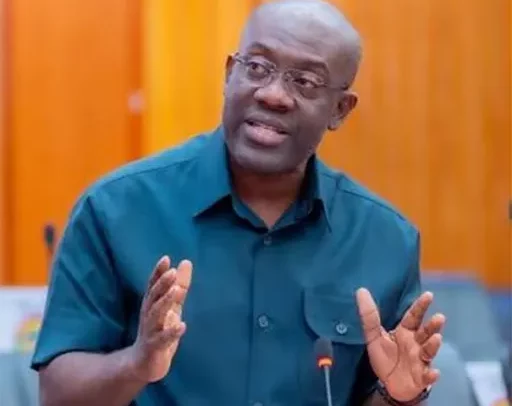
Kojo Oppong Nkrumah
Former Minister of Works and Housing, Kojo Oppong Nkrumah, has described the continued implementation of the Private Sector Participation (PSP) model used to restructure the Saglemi Affordable Housing Project as vindication of the policy introduced by the previous New Patriotic Party (NPP) administration.
According to him, the model was developed to address the difficulty of relying solely on public funds to complete major housing projects, while bringing private capital and expertise into their delivery.
Mr. Oppong Nkrumah said the model enabled the government to bring in a private sector partner to complete the project without requiring the state to provide additional funding for the outstanding works.
He said the private sector partner would recover its principal and margin after the completed houses were taken up by off-takers through mortgages, while the government would also recover its principal and margin under the arrangement.
He said the development was particularly significant because the PSP model had attracted criticism when it was introduced, with opponents alleging that the Saglemi project had been sold and that the arrangement was intended to benefit political insiders.
“We insisted that, no, what we had done was clearly above the board, and had been done by some of the best practices in the world,” he said.
Mr. Oppong Nkrumah said the current administration’s decision to continue with the model and proceed with the delivery of the first batch of about 700 housing units, with another 1,000 and subsequent 1,000 units in the pipeline, demonstrated that the approach was workable.
“This is clear evidence for me, first of all, that the PSP model that we put in place has been vindicated, contrary to all the stories that were told at the time, and all the partisan sneer that was put out,” he said.
He argued that the country could use the experience to rethink how it finances infrastructure and other public projects, instead of depending primarily on tax revenues or sovereign borrowing.
“Instead of waiting for public sector money every time to be able to do a lot of our infrastructure projects, if we pay more attention to the PSP model, we can do a lot of projects,” he said.
Affordability
Mr. Oppong Nkrumah, however, stressed that affordability must remain a key consideration in the delivery of the housing units.
He said the pricing mechanism agreed between the government and the private sector operator should ensure that the houses remained affordable to ordinary Ghanaians.
He also called for a transparent sales process through which members of the public would be able to apply for the houses and purchase them through mortgage arrangements.
According to him, such a system would help dispel concerns that affordable housing projects could be distributed among public officials or politically connected individuals.
He expressed optimism that the transparent application process would increase public confidence in the housing programme.
More Public-Private Partnerships
Mr. Oppong Nkrumah urged the government to extend the PSP approach beyond Saglemi to other abandoned or incomplete housing projects across the country.
He cited proposed housing projects in the Ashanti Region and other areas, saying private-sector participation could provide the capital and expertise needed to complete them without placing additional pressure on public finances.
He said a framework for affordable housing through public-private partnerships had been put in place before the previous administration left office.
Under the framework, he explained, the state would provide support to private-sector developers to reduce their costs, enabling them to deliver houses at lower prices to consumers.
Mr. Oppong Nkrumah said successful implementation of the framework could significantly increase housing delivery while stimulating economic activity in the construction sector.
He said the resulting construction activity would create jobs and incomes while enabling more Ghanaians to acquire assets and build wealth.
Two years for Mahama
Mr. Oppong Nkrumah said the current administration had about two years remaining in office to pay greater attention to the framework and expand affordable housing delivery.
He, however, indicated that if the government failed to implement the framework before the end of its tenure, a future NPP administration led by Dr. Mahamudu Bawumia would give it greater attention.
He said the next NPP administration would seek to mainstream private-sector participation in the delivery of public goods and services.
He also criticised the tendency among politicians to reject initiatives introduced by their opponents for partisan reasons, only to adopt the same policies when they assume power.
“If a model is rolled out, if a project is rolled out, and it’s good for Ghana, it’s good for Ghana. Let’s continue with it. And let’s give credit where credit is due,” he said.
By Ernest Kofi Adu