
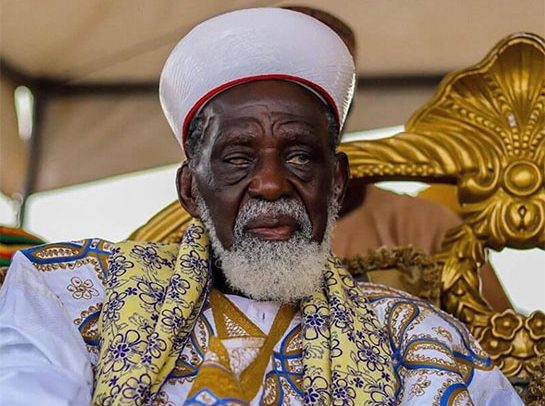
The Office of the National Chief Imam (ONCI) has called for a healthy and constructive debate on the teaching of Arabic as an optional subject in schools.
As the country explores the expansion of language policies within our educational space, the ONCI noted that “it is vital to separate cultural and linguistic tools from religious and sectarian doctrines.”
Arabic, the Office explained, is a global language of diplomacy, science, and commerce – not a religious identity, practice, and influence.
In an increasingly interconnected global economy, equipping our youth with diverse linguistic skills is a strategic investment in their future, the statement went on, adding that “as the Ministry of Education has rightly noted, Arabic is one of the six official languages of the United Nations and a primary driver of communication across an economically vibrant region in the world.”
By introducing a standardised curriculum through the National Council for Curriculum and Assessment (NaCCA), the Ministry is providing a vital structure and quality assurance, the ONCI pointed out.
This framework, it added, ensures that any Ghanaian student who chooses this path will be properly positioned to engage in global diplomacy, international trade, and cross-border research.
The ONCI commended the Ministry of Education “for its clear and timely clarification that Arabic remains strictly an optional course of study. It is neither mandatory nor intended to compromise the secular foundation of our public educational system.”
In a climate of religious pluralism, the statement noted the secularity of Ghana is, indeed, constitutionally grounded not by a mere provision but by an entrenched position. Just as the study of French, German, or Spanish has historically enriched our academic landscape without altering the cultural or religious identities of Ghanaian students, the standardised Arabic curriculum, the ONCI insisted, “should be viewed purely through the lens of academic excellence. It is a tool for cognitive development, not an instrument for religious advancement.”
In the light of the foregone therefore, the ONCI has urged all educationists, policymakers, and the general public to approach this development with objectivity and commitment to national progress. “We fully support the Ministry of Education’s call for citizens to verify information from authoritative sources rather than allowing misinformation and disinformation to spark unnecessary religious tension,” it added.
The Office has stated that it remains entirely dedicated to working alongside the Ministry of Education, the Ghana Education Service (GES), and all relevant institutions to foster an inclusive, peaceful, and globally competitive educational framework for the country.