
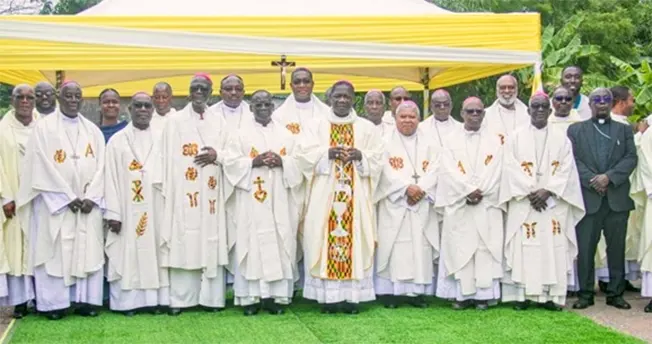
Catholic Bishops
The Ghana Catholic Bishops’ Conference has called for an independent review of the ongoing Senior High School (SHS) placement exercise amid allegations of bribery, unfair admissions, inappropriate school placements and the growing influence of “protocol” arrangements.
The Bishops said although the Computerised School Selection and Placement System was introduced to promote fairness and equal access, persistent challenges continued to undermine public confidence in the process.
In a statement signed by the President of the Conference, Most Rev. Matthew Kwasi Gyamfi, Bishop of Sunyani, the Bishops said the placement exercise must be transparent, accountable and responsive to genuine complaints.
The Conference said 604,567 candidates qualified for placement this year, but only 527,932 had been placed when the results were released.
It acknowledged that placement depended on several factors, including academic performance, programme choices, boarding or day preferences and available spaces. It, however, insisted that the outcomes must be understandable and demonstrably fair.
The Bishops expressed concern over reports of students being placed in schools considered unsuitable for their sex, disability, personal circumstances or location.
They were particularly concerned about cases where students were assigned to day schools located so far from their homes that daily commuting could become expensive, unreasonable or unsafe.
The Conference called for genuine placement errors to be corrected swiftly and for appropriate arrangements to be made for students with disabilities.
It also expressed concern over allegations that parents were being asked to pay money to secure places for their children.
The Bishops stressed that no official, agent or intermediary should demand or accept payment where placement was intended to be free. They called for investigations into such allegations and said anyone found culpable should face disciplinary action and, where necessary, criminal prosecution.
On the controversial issue of “protocol” admissions, the Conference demanded greater transparency, saying the public deserved to know the legal basis, number of places involved, criteria used and persons responsible for such arrangements.
It warned that the placement system could not command public confidence if parents believed that money, political connections or influence could secure places for some children at the expense of others.
Mission schools
The Bishops also renewed their call for the implementation of their decision to reserve 20 percent of annual admissions in Catholic mission schools for Catholic candidates.
They said the decision was reached at the National Catholic Education Forum in Koforidua in 2025 and, therefore, was not a new demand.
According to the Conference, the arrangement would help mission schools maintain a meaningful population of Catholic students who could participate in their religious and moral formation.
The Bishops further called for the long-awaited agreement between the government and the Churches on the management of mission schools to be concluded and signed without further delay.
They said the agreement should clearly define responsibilities relating to admissions, governance, the appointment of head teachers, religious and moral formation, discipline, infrastructure and accountability, while protecting the distinct identity of mission schools.
The Conference also proposed an accessible appeals mechanism, periodic reviews of school categories and increased government investment in infrastructure, teachers, laboratories and learning materials to ease pressure on highly sought-after schools.
It maintained that technology should support justice rather than replace human responsibility and urged the government to build a placement system in which merit, choice, fairness and the best interests of the child determine admission outcomes.
By Daniel K Orlando, Ho