
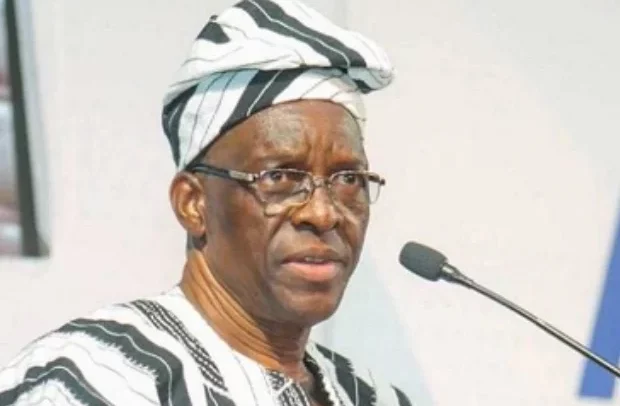
Speaker, Alban Sumana Kingsford Bagbin
Illegal small-scale mining, popularly known as galamsey, has become one of the most serious environmental threats facing West Africa, the Speaker of Parliament, Alban Sumana Kingsford Bagbin, has warned.
According to him, the destructive practice, together with other forms of environmental degradation, is threatening livelihoods, economic security and the quality of life of people across the sub-region.
The Speaker made the observation in an address delivered on his behalf by the Second Deputy Speaker of Parliament, Andrews Amoako Asiamah, at the joint opening ceremony of the ECOWAS Parliament’s seminar and the Second Extraordinary Session of the ECOWAS Parliament in Accra yesterday.
The seminar is being held on the theme, “Climate Change, Environmental Degradation, Population Displacement and Growing Insecurity in the ECOWAS Region.”
Mr. Bagbin said galamsey was contributing to water contamination, deforestation, destruction of habitats, soil erosion and degradation, air pollution, biodiversity loss and health risks.
He said the environmental challenges were interconnected and therefore required an integrated response from countries in the region.
He noted that climate change was already disrupting weather patterns, intensifying floods and droughts and putting increasing pressure on natural resources, while deforestation, pollution and unsustainable exploitation were weakening the resilience of communities.
The Speaker said the consequences of environmental degradation went beyond damage to the environment, as they also affected economic security and the livelihoods of vulnerable populations.
He said the growing insecurity in the region showed that security could no longer be understood only in traditional terms but must also encompass human security, including the safety of people, their livelihoods, food systems and the environment.
According to him, climate change could intensify competition over scarce resources, while environmental degradation could drive migration and expose displaced populations to exploitation and trafficking.
He, therefore, called for greater investment in preventive capacity and resilience-building instead of waiting for environmental and security crises to occur before responding.
Mr. Bagbin urged parliamentarians across the ECOWAS region to support legislation on environmental governance, climate adaptation, disaster preparedness and natural-resource management.
He also called for stronger regional cooperation to address population displacement and protect displaced persons, refugees and host communities.
He stressed that no single ECOWAS member state could tackle the challenges alone because rivers and ecosystems crossed national boundaries, while environmental crimes operated across jurisdictions.
He called for adequate financing for sustainable development, climate adaptation, peace and security, urging the ECOWAS region to strengthen its own capacity to finance these priorities.
Mr. Bagbin said the transition towards a climate-resilient and sustainable West Africa could also create opportunities for economic growth and employment, particularly in climate-smart agriculture, renewable energy and entrepreneurship.
He urged the region to demonstrate political will and solidarity in addressing environmental threats, stressing that the security and prosperity of one-member state were inseparable from those of the entire ECOWAS region.
By Ernest Kofi Adu