
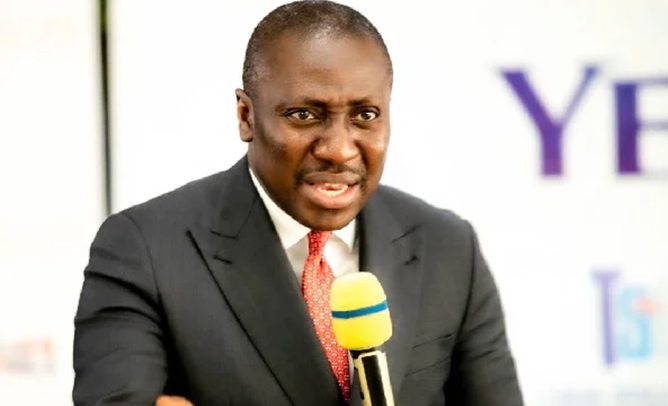
Alexander Afenyo-Markin
The Minority Leader in Parliament, Alexander Afenyo-Markin, has called for the regional integration of the Economic Community of West Africa States (ECOWAS) to go beyond treaties, protocols and institutional meetings to deliver tangible benefits to citizens across West Africa.
He said the true value of ECOWAS integration must be felt in communities through opportunities for young people, the free movement of citizens and businesses, and the collective ability of member states to confront challenges that individual countries cannot tackle alone.
Mr. Afenyo-Markin, who is the immediate-past Leader of Ghana’s delegation to the ECOWAS Parliament, made the call at the conclusion of an ECOWAS parliamentary seminar in Accra, where he reflected on the challenges confronting the region and the responsibility of the ECOWAS Parliament to remain connected to the people it represents.
According to him, the ECOWAS Parliament must periodically move its activities beyond national capitals and engage directly with communities as part of efforts to deepen regional integration.
He cited Winneba, the capital of his Efutu constituency, as an example of how bringing parliamentary activities closer to citizens could promote public participation in regional affairs.
He noted that the ECOWAS Parliament held a parliamentary seminar in Bongo Town, Liberia, in 2019, before holding a seminar and extraordinary sessions in Winneba in 2021.
By 2024, he said, Winneba had hosted activities of the Community Parliament on four occasions.
Mr. Afenyo-Markin said the engagements provided traditional authorities, the University of Education, Winneba, businesses, young people and residents with opportunities to interact with the regional Parliament and participate in discussions on regional integration.
He expressed satisfaction that the initiative of taking major parliamentary activities beyond national capitals was continuing, citing engagements in Kano and Port Harcourt, with Bayelsa expected to continue the tradition.
Mr. Afenyo-Markin, who is also the Minority Leader in Ghana’s Parliament, again drew attention to the relationship between environmental stress and insecurity in the region.
“Without reducing every conflict to climate change alone,” he said, climate change could intensify existing pressures, worsen poverty, deepen competition over land and water, and weaken livelihoods.
Mr. Afenyo-Markin, who remains a member and Third Deputy Speaker of the ECOWAS Parliament, said his tenure as leader of Ghana’s delegation had strengthened his conviction that the regional body must remain close to the people in whose name it serves.
He subsequently handed over leadership of Ghana’s delegation to the ECOWAS Parliament to George Kwaku Ricketts-Hagan, Deputy Majority Leader and Member of Parliament for Cape Coast South.
He expressed confidence that Mr. Ricketts-Hagan would bring his experience, commitment to parliamentary diplomacy and understanding of regional integration to the new responsibility.
Mr Afenyo-Markin pledged his continued support to his successor and urged participants at the seminar to ensure that their deliberations translated into practical outcomes for the people of West Africa.
By Ernest Kofi Adu