
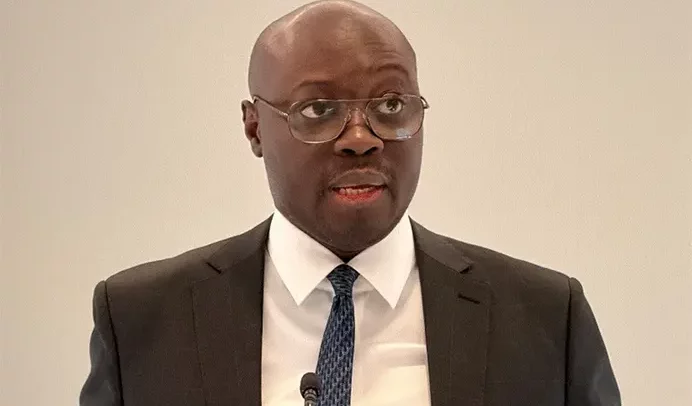
Dr. Cassiel Ato Baah Forson, Minister for Finance
The International Monetary Fund (IMF) has raised Ghana’s economic growth forecast for 2026 to 5.7 percent and projected year-end inflation at 4.8 percent, despite global economic pressures and uncertainty.
The growth forecast represents an increase of 1.1 percentage points from the 4.6 percent projected in April.
The projections are contained in the IMF’s latest economic outlook report, released on the sidelines of the Annual IMF/World Bank Meetings in Bangkok, Thailand.
The upward revision reflects Ghana’s commitment to fiscal discipline, spending targeted at stimulating growth, and strong commodity export earnings, particularly from gold.
Ghana’s commitment to targets under the Policy Coordination Instrument (PCI) programme also contributed to the revised outlook, according to information available to Joy Business.
However, sources close to the Fund have expressed concern about Ghana’s reliance on gold exports and urged the government to diversify its export earnings.
The IMF expects growth to moderate to 5.2 percent in 2027. Its 2026 forecast exceeds the government’s estimate of 4.8 percent outlined in the 2026 Budget, indicating a more optimistic assessment of Ghana’s growth prospects.
According to the Ghana Statistical Service (GSS), the economy expanded by 6.0 percent in the second quarter of 2026, bringing first-half growth to 6.2 percent.
The IMF projects that Ghana will end 2026 with inflation of 4.8 percent, down from its April forecast of 7.9 percent.
The revised projection is also below the government’s and the Bank of Ghana’s target band of 8 percent ± 2 percentage points, which ranges from 6 percent to 10 percent.
With September inflation at 5.2 percent, the IMF’s forecast suggests a further easing in price pressures by the end of the year.
Bank of Ghana internal projections cited by Joy Business had anticipated an increase in inflation in September, while expecting the year-end rate to remain within the target band.
If the IMF’s forecast materialises, Ghana would record single-digit year-end inflation for a second consecutive year, following a similar outcome in 2025.
World Bank maintains forecast
The World Bank, in its Africa economic update released in October 2026, maintained its growth forecast of 4.8 percent for Ghana, unchanged from April. It projects 4.9 percent growth in 2027.
The Bank expects growth to be supported by the services sector, a recovery in oil and gas activity, and continued progress with structural and fiscal reforms under national programmes.
It described economic activity in the second quarter of 2026 as robust, although growth moderated slightly, with real GDP expanding by 6.0 percent year-on-year.
On the expenditure side, the Bank said growth was supported by strong domestic demand. Investment increased by 53.0 percent, while domestic demand rose by 11.2 percent, reflecting continued strength in private and public spending.
A Business Desk Report