
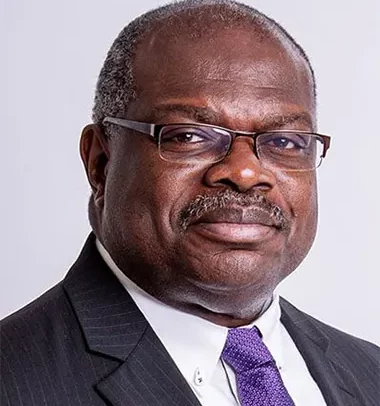
Prof. Ernest Aryeetey
Professor Ernest Aryeetey, Professor of Development Economics at the Institute of Statistical, Social and Economic Research (ISSER), University of Ghana, has disclosed that Ghana is producing more graduates than jobs, and it is time to stop pretending education alone will save the economy.
He made this blunt warning in his keynote address at the Achimota Speaks forum organised as part of the association’s centenary celebrations to examine the future of education in Ghana under the theme, “The Classroom and Beyond: The Achimota Experiment and the Future of Education.”
“We have increased the number of people that go through our schools. We haven’t increased the number of places where they can work,” he said.
He called it “schooling without factories and modern farms.”
Prof. Aryeetey questioned what happens to engineering and agriculture graduates in an economy with limited industrial capacity and few modern agricultural opportunities.
“You can’t fix the school system without fixing what the kids will do when they leave. By all means, invest in schools, but don’t end there. Fix the economy. Fix manufacturing, fix agriculture,” he stated.
Ghana’s development priorities, he argued, must shape what is taught, how it is taught, and what skills students leave school with.
Reflecting on Achimota School’s founding philosophy, Prof. Aryeetey said its emphasis on equal access and the holistic development of the “head, heart and hands” is still relevant 100 years on.
“The principles of equality are as relevant today as they were 100 years ago. The fact that you can go to school and be able to use your head, your heart, and your hands is still important today,” he added.
He said the proportion of Achimota students who failed to progress to tertiary education had risen from about 5% in the past to more than 35% — exceeding 40% in some years.
“There is enough evidence that there is a problem with the school system, and it’s not only Achimota School. All the best schools in Ghana have the same problem,” he stated.
Prof. Aryeetey pointed to Singapore, which aligned education tightly with its economic strategy, and South Korea, which focused on producing globally competitive learners.
He also cited China’s massive investment in Science, Technology, Engineering and Mathematics (STEM), and Finland and Australia, which integrate the arts into STEM education.
He indicated that Ghana must stop treating education as separate from the economy.
“Invest in schools, yes. But if there are no factories, no modern farms, and no digital jobs waiting, schooling alone will not deliver development,” he reiterated.
During the panel discussion, Chief Executive Officer and Founder of Shelter Afrique Ghana Limited, Charles W. N. Dugbartey-Narnor, called for wider access to education and digital learning resources to prepare students for an increasingly technology-driven world.
Looking ahead to 2040, Mr. Dugbartey-Narnor said Ghana must equip students with the competencies to compete globally, while ensuring that digital tools and learning resources were accessible to as many learners as possible.
He proposed converting school dormitories into classrooms as one possible way of accommodating more students and expanding access to education.
By Prince Fiifi Yorke