
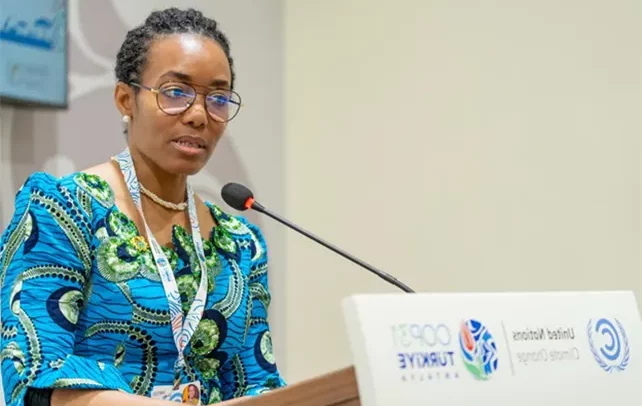
Dr. Zanetor Agyeman-Rawlings
The Minister for Environment, Science and Technology (MEST), Dr. Zanetor Agyeman-Rawlings, has called on African countries to adopt a common position on trade and development of the continent’s critical minerals, insisting on adding value to resources through regional value chains.
Speaking at the Ministerial Meeting of the Africa Day Ministerial segment of the 31st United Nations Climate Change Conference (COP31) in Antalya, Turkiye, the minister said this would ensure Africa secures greater economic benefits from the global transition to clean energy.
Dr. Agyeman-Rawlings noted that Africa holds approximately 30 percent of the world’s critical mineral reserves, including a significant share of global cobalt and platinum group metals, which are essential for manufacturing batteries, wind turbines, electric vehicles and solar panels.
She emphasised that without Africa, there will be no green transition, stressing that the continent’s mineral wealth remains central to the world’s net-zero ambitions.
Dr. Agyeman-Rawlings, however, stated that mineral extraction has often resulted in environmental degradation, including deforestation, polluted rivers and damaged lands, leaving African communities to bear the consequences of an energy transition from which they have not benefited sufficiently.
She argued that countries and industries that have historically benefited from the exploitation of Africa’s natural resources must recognise their responsibility to support environmental restoration and climate resilience on the continent.
Among Ghana’s key demands were the delivery of commitments to triple adaptation finance by 2035, with grant-based funding directed towards water security, forest protection and resilient landscapes.
She also called for dedicated financing to restore rivers, forests and lands degraded by mining, as well as comprehensive multi-hazard early warning systems backed by funding for anticipatory action at the community level.
Highlighting the connection between climate change and water security, she observed that African communities experience the impacts of climate change through floods, droughts, drying rivers and water pollution.
She stressed that early warning systems could only save lives when supported by timely action and adequate financing that reaches vulnerable communities before disasters occur.
Dr. Agyeman-Rawlings maintained that Africa must collectively determine the conditions under which its green minerals are traded, ensuring that the continent’s natural wealth contributes to sustainable development, industrialisation and prosperity for its people.
She stated that global leaders should recognise Africa’s contribution to the green transition and honour their obligations to the continent, adding that the world needs Africa’s minerals to secure its future.
“Africa needs the world to honour its obligations to ours. I hope that the discussions would mark a turning point in Africa’s efforts to assert a stronger voice in global green mineral negotiations,” she stressed.
By Ebenezer K. Amponsah