
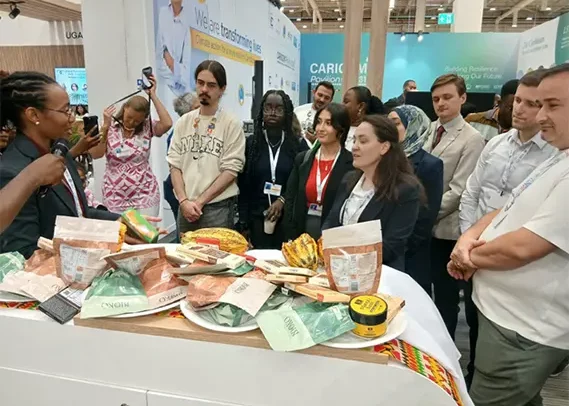
Dr. Zanetor Agyeman-Rawlings (L) with some participants
The Minister for Environment, Science and Technology (MEST), Dr. Zanetor Agyeman-Rawlings, showcased cocoa and other indigenous products at the Ghana Pavilion during the 31st United Nations Climate Change Conference (COP31) in Antalya, Türkiye, as part of efforts to promote science-driven local production.
The exhibition celebrated Ghanaian enterprise and creativity by promoting the country’s cocoa-based products alongside a range of locally developed products from the Council for Scientific and Industrial Research (CSIR), particularly its Food Research Institute (FRI).
The exhibition offered COP31 participants an opportunity to experience Ghana as one of the world’s leading cocoa-producing countries and also presented a picture of a country increasingly focused on transforming its natural resources through research, science, and technology and value addition.
The products exhibited at the pavilion attracted several people as visitors expressed appreciation for the quality and variety local products from Ghana displayed as some also expressed their interest beyond COP 31 to explore possible partnerships and business opportunities as they sampled the various Ghanaian products.
According to the Minister, the exhibition represented more than an opportunity to introduce Ghanaian products to an international audience which underscored the importance of connecting scientific research with practical economic opportunities, supporting local industries and ensuring that greater value is created from Ghana’s natural resources.
Dr. Agyeman-Rawlings highlighted the opportunities available in moving beyond the export of raw commodities towards processing, manufacturing and the development of competitive Ghanaian brands, particularly through the promotion of cocoa-based products.
She said the inclusion of products developed through CSIR’s research also demonstrated the important contribution of science and technology to national development, translating research from laboratories into products capable of competing in local and international markets. This, she noted, reflected the continued contribution of Ghanaian scientists and researchers to the country’s industrial and economic transformation.
The exhibition also provided an informal but valuable platform for international networking, as visitors interacted with the products and sought further information about their availability and potential business connections.
The gathering in Antalya to discuss climate action, resilience and sustainable development afforded Ghana a global platform to demonstrate that environmental sustainability and economic opportunities could go hand in hand. Through its participation, Ghana was not only sharing its climate ambitions with the world but also showcasing the taste, talent and innovation of its people.
The Minister’s engagement at the Ghana Pavilion also underscored an important message in the country’s participation in global climate discussions; that Ghana’s story goes beyond its climate commitments to encompass the achievements of its people, its productive capacity, its scientific ingenuity and the opportunities it offers the world.