
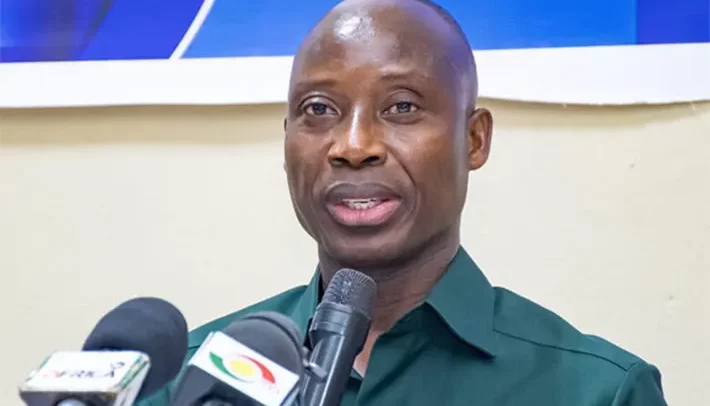
Dr. Alhassan Iddrisu
Government officials increasingly demanded unofficial payments from citizens seeking public services in the second half of 2025, with nearly seven out of every 10 people who encountered bribery reporting that public officials asked them for extra payments, according to the latest Governance Series released by the Ghana Statistical Service (GSS).
The report also showed that the proportion of Ghanaians who paid bribes rose from 14.3 percent in the first half of 2025 to 18 percent in the second half, meaning about one in every six citizens paid a bribe to access public services during the period.
The survey found that although most bribe payments remained relatively small, larger payments became more common during the second half of 2025.
While 84.4 percent of all bribe payments were GH¢500 or less, the share of bribe payments exceeding GH¢1,000 increased from 6.6 percent in the first half of the year to 9.1 percent in the second half. This means that nearly one in every 11 bribe payments involved amounts above GH¢1,000.
Presenting the findings at a Governance Series event organised by Three Reports and the GSS yesterday, Government Statistician, Dr. Alhassan Iddrisu, said corruption pressures intensified between July and December 2025 despite the country’s overall governance performance improving compared with 2024.
“The most recent six months, which is July to December 2025, got harder compared to the previous six months, which is January to June 2025,” he said.
The Governance Series (Wave 3), which measures citizens’ experiences with corruption and their participation in public decision-making under the Sustainable Development Goal (SDG) 16 indicators, was conducted between February 26 and March 24, 2026.
It covered experiences between July and December 2025 using the same nationally representative panel of household heads drawn from the 2021 Population and Housing Census.
According to the report, the increase in bribery was driven largely by demands from public officials rather than voluntary offers by citizens. Requests by officials for extra payments or gifts jumped from 50.9 per cent in the first half of 2025 to 69.4 per cent in the second half.
“The pressure sits at the counter. The problem now is less what citizens offer and more of what officials would ask,” Dr. Iddrisu stated.
The report said that while bribery became more widespread, its pattern changed significantly. Repeat bribery declined sharply, with the proportion of respondents who paid bribes five or more times dropping from 24 percent to 3.7 percent.
In contrast, one-time payments rose from 38.8 percent to 70.8 percent, suggesting that bribery is increasingly experienced as isolated incidents rather than repeated demands.
The report identified the Ghana Police Service as the institution most frequently associated with demands for unofficial payments.
Among respondents who refused to pay when asked for a bribe, 53.2 percent cited the Police Service. Within the service, the Motor Traffic and Transport Department (MTTD) continued to record the highest incidence of gift-giving, rising slightly from 51.9 per cent to 54.6 percent.
The report also noted growing public resistance to corruption. The proportion of citizens who refused to pay when asked for unofficial payments increased from 3 per cent to 4.9 percent between the first and second halves of 2025.
Beyond corruption, the survey examined citizens’ perceptions of participation in governance. It found that 64.4 percent of respondents believed the political system allowed ordinary citizens to have a say in decision-making, down from 68.4 percent in the previous survey.
Meanwhile, the proportion of people who felt they had no say at all increased slightly from 29.2 percent to 30.5 percent.
Feelings of exclusion were highest among young people aged 18 to 24, persons aged 65 years and above, and the unemployed.
Similarly, the proportion of respondents who believed they had no influence over government decisions rose marginally from 32.5 percent to 33.9 percent, although regions such as Ahafo and the Central Region recorded improvements.
When asked about their priorities, respondents consistently identified better roads, reliable water supply, healthcare, schools and employment opportunities, while expressing a desire to have a greater voice in how these services are delivered.
Despite the deterioration recorded during the second half of 2025, Dr. Iddrisu stressed that the country’s overall governance performance improved compared with 2024.
“The full year, which is 2025, got better compared to 2024. Both of these stories are true, and that’s the beauty of the six-monthly survey that we do, to be able to look at trends within waves and even compare between years,” he explained.
By Ernest Kofi Adu