
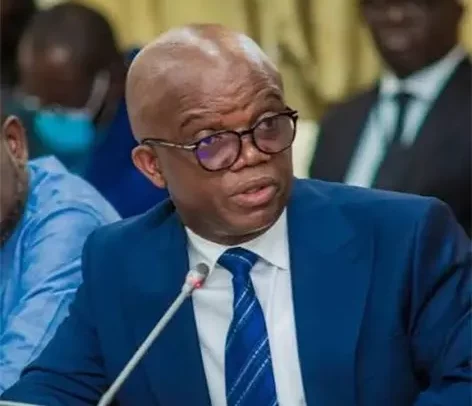
Dr. Stephen Amoah
The Member of Parliament (MP) for Nhyiaeso, Dr. Stephen Amoah, has called for a major shift in the country’s economic policy framework, arguing that the largely free-market system has failed to improve living conditions and is contributing to the persistent high cost of living.
Presenting a statement in Parliament, Dr. Amoah advocated the adoption of a mixed market economy, which combines elements of both state intervention and market-driven principles, as a means of addressing economic inequalities and improving the welfare of citizens.
“The call for this new paradigm shift has been necessitated generally by decades of high cost and low standard of living which have been holding up the expected utility and satisfaction of the citizenry,” he said.
While acknowledging that free markets protect private property rights and encourage private-sector participation, Dr. Amoah maintained that the model has significant shortcomings in an economy such as Ghana’s.
He contended that the system allows monopolies, oligopolies and cartels to dominate markets, creating artificial shortages and driving up prices at the expense of consumers.
“In an ecosystem such as ours in which business actors are predominantly profiteering, absolute free market economy will rather do us more economic harm than good,” he stated.
The MP further argued that the country’s free-market structure has contributed to a disconnect between economic growth and improvements in the living standards of ordinary citizens.
He said although the economy may record positive performance indicators, the benefits often take too long to reach households because of inefficiencies within the market system.
As an alternative, Dr. Amoah proposed a mixed market economy citing countries such as the United Kingdom, the United States and Germany as examples of advanced economies that operate mixed-market systems.
He urged Parliament to take a closer look at the proposal and consider legislative or policy measures that could facilitate the transition.
Dr. Amoah suggested that the relevant parliamentary committees study the issue and advise the appropriate authorities on the introduction of either a new law or an executive policy framework to support the shift.
As part of the proposed reforms, he called for the introduction of price-cap laws or policies to curb what he described as exorbitant charges imposed by monopolies, oligopolies and cartels.
Beyond market reforms, Dr. Amoah called for broader economic policy reviews, including inflation-targeting measures, fiscal anchors, fiscal targets and the country’s approach to managing exchange-rate volatility.
The MP expressed hope that Parliament and the Executive would give serious consideration to the recommendations as part of efforts to address the country’s socioeconomic challenges and improve the welfare of citizens.
By Ernest Kofi Adu, Parliament House