
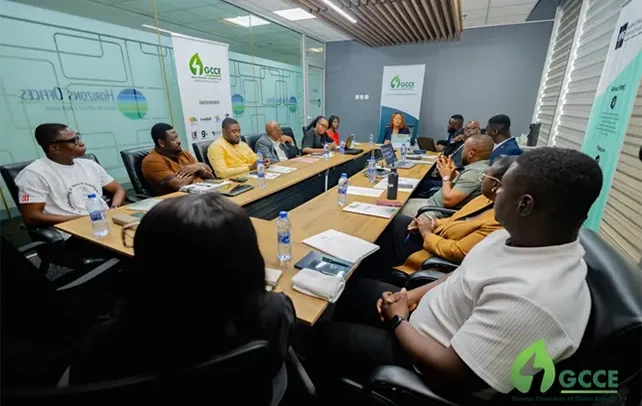
A Scene during the meeting
The Ghana Chamber of Clean Energy has launched an industry-led push for reforms to Ghana’s electric vehicle import regime, with the inauguration of its Electric Vehicle Working Group.
The meeting brought together key players across the country’s emerging electric mobility ecosystem to develop a coordinated position on fiscal policy and advocate for measures that will make EVs more affordable while supporting local industry.
Members of the Working Group include EcoDrive, Solar Taxi, Grace Mobility, Leasafric Ghana, Uber, the Importers and Exporters Association, as well as EV assemblers, importers, technology providers and other industry associations.
GCCE said the group was formed in response to the lack of a unified industry voice on electric mobility policy. Although government has announced policies to support EV adoption, high import duties and slow implementation of incentives continue to limit affordability and slow market growth.
Individual companies have engaged government separately, but GCCE noted that a coordinated approach is now needed to drive practical and fiscally responsible reforms.
Three Strategic Priorities
To guide its advocacy, the Working Group identified three priority areas. First, it will develop evidence-based proposals to reform Ghana’s EV import duty framework, draft recommendations to support Ghana’s growing EV assembly and manufacturing sector and build a single industry position to guide engagement with government on the design and rollout of electric mobility policies and fiscal incentives, including for two- and three-wheelers.
Speaking after the meeting, GCCE Lead for the Working Group, Emmanuella Biney, said Ghana has made progress in setting policy direction for electric mobility, but cost remains the biggest barrier.
“Ghana has made important progress in setting the policy direction for electric mobility, and we’re seeing more companies investing in the sector,” she said. “But for many businesses and consumers, the cost of electric vehicles is still too high. This Working Group gives industry the opportunity to come together, engage government with one voice, and help bring about the reforms that make electric mobility more affordable while supporting local industry.”
She added that the Chamber’s objective goes beyond duty reductions.
“Our objective is not only to advocate for lower import duties. We want to work with government to design reforms that improve access to electric vehicles, strengthen local assembly and manufacturing, and build an electric mobility ecosystem that delivers cleaner air, creates quality jobs, and supports Ghana’s long-term socio-economic growth.”
Following the inaugural meeting, the Working Group will hold technical discussions over the coming weeks.
It will then begin direct engagement with the Ministry of Finance, Ministry of Transport, Ghana Revenue Authority, and other relevant government institutions and development partners.
A Daily Guide Report