
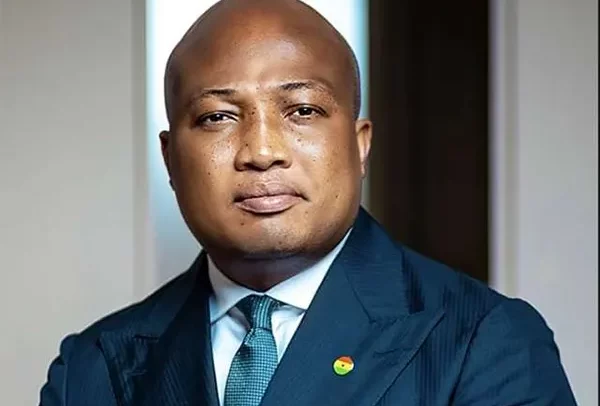
Samuel Okudzeto Ablakwa
The Government has announced its decision to join the BRICS organisation, a move that has triggered concerns over its implications for the country’s national interest, with the Minority in Parliament demanding answers from the Minister for Foreign Affairs, Samuel Okudzeto Ablakwa.
Reacting to the announcement, Member of Parliament (MP) for Damongo and Ranking Member of Parliament’s Foreign Affairs Committee, Samuel Abu Jinapor, acknowledged the potential benefits should the country’s bid be successful, but was quick to highlight the far-reaching adverse implications that must be addressed.
He questioned why only three African countries have so far become full members, and what lessons can be drawn from Ethiopia’s experience since joining BRICS, including its balance of trade performance.
He also raised concerns about why Ghana is not taking the path of Nigeria, which is a partner country of BRICS and not a full member, but is also an accredited member of the New Development Bank (NDB), the financial arm of BRICS, thereby limiting its exposure and risk.
“What will be the implication of that on our national economy and the finances of our country, what will be the implication on our country’s national economy vis-à-vis it potentially becoming a dumping ground for the big nations of BRICS such as China, especially when our country is largely an import-driven economy,” he asked.
Mr. Jinapor further highlighted the implication for geopolitics, given that Ghana is a non-aligned country.
He, therefore, demanded that the Minister for Foreign Affairs, when Parliament resumes, brief the House as a matter of urgency.
“We think the Foreign Affairs Minister, once Parliament resumes, ought to brief Parliament as a matter of urgency to set out the full details of this decision and the full contours of our relationship.
“Our potential relationship with BRICS, and what the implications will be on our national economy, our national interest, and Ghana’s standing in the international community, given the decision that has been taken,” he said.
Background
BRICS was formed in 2009 by Brazil, Russia, India and China, with South Africa joining in 2010. In 2024, the bloc expanded to include Egypt, Ethiopia, Iran and the United Arab Emirates, with Indonesia joining in 2025, bringing membership to 11, with Nigeria and several others as partner states.
The bloc positions itself as a platform for South-South cooperation, reform of global governance and alternative development financing through the New Development Bank based in Shanghai.
Government is yet to provide full details of its BRICS application, the timeline for accession and the expected benefits.
A Daily Guide Report