

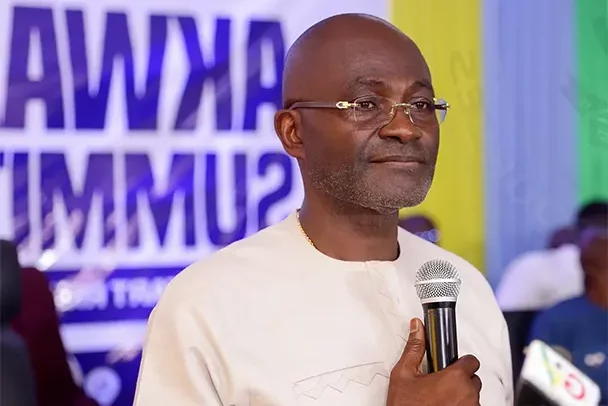
Ken Agyapong
New Patriotic Party (NPP) presidential hopeful and businessman, Kennedy Ohene Agyapong, has reiterated his commitment to making Ghana self-sufficient in food production, stressing that fully harnessing the country’s vast agricultural potential will create jobs, strengthen food security and ease pressure on the foreign exchange market.
Speaking to NPP delegates in the Greater Accra Region, Mr. Agyapong said the country’s heavy dependence on imported food is hurting local industries and worsening pressure on the cedi, as billions of dollars are spent every year on items that can be produced locally.
According to him, building a strong domestic food production base would create a ripple effect of jobs across the economy, from farming and agro-processing to packaging, transportation, storage and retail.
“This is about jobs, food security and economic stability. When we produce what we eat, we create work for our people and keep money circulating within Ghana,” he stated.
Mr. Agyapong explained that achieving this goal would require deliberate industrialisation and strong government support, alongside a review of food imports to ensure that local producers are not undermined by unnecessary foreign competition.
He noted that Ghana continues to import basic food items such as rice, tomatoes, maize, cooking oil and other essentials, despite having fertile land, water resources and a youthful labour force capable of producing them.
The NPP flagbearer hopeful warned that excessive food imports are placing sustained pressure on the country’s foreign exchange reserves, increasing demand for the US dollar, weakening the cedi and pushing up the cost of living.
“Every dollar we use to import food is a dollar chasing the forex market. That makes the dollar more expensive and affects prices across the economy,” he said.
Mr. Agyapong added that many developed economies, including those in the West, relied on strong regulatory frameworks and strategic import management at critical stages of their development to build domestic industries and achieve self-reliance.
He also referenced comments by Majority Leader in Parliament, Mahama Ayariga, who recently questioned the impact of National Farmers’ Day, noting that Ghana currently spends between $3.5 billion and $4.5 billion annually on food imports.
According to Mr. Agyapong, the Majority Leader’s remarks confirm that food imports are not only exporting jobs, but also putting avoidable strain on the forex market, making decisive policy action necessary.
He assured delegates that under his leadership, the government would create a supportive and sustainable environment for farmers and agro-based industries, insisting that food sustainability, job creation and forex stability are inseparable pillars of national development.
Mr. Agyapong therefore called on party leaders and delegates to give him the opportunity to lead, stressing that he has a clear vision, practical solutions and the strong will to see them through.
He said his vision is to beat the legacy of Dr. Kwame Nkrumah by achieving true self-reliance through industrialisation, job creation and economic transformation that delivers tangible benefits to ordinary Ghanaians.
A Daily Guide Report