
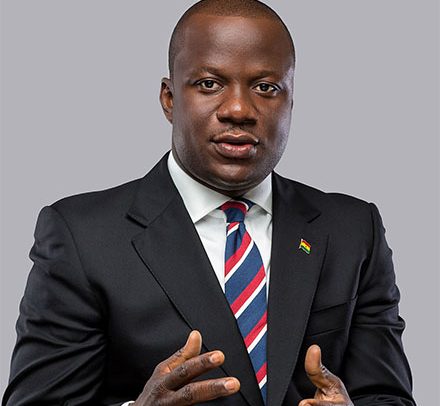
Samuel A. Jinapor
Member of Parliament (MP) for Damongo, Samuel A. Jinapor, has challenged the government’s claim of running a lean administration, arguing that the true size of government is measured by its cost to taxpayers, not just the number of ministers.
Mr. Jinapor’s critique follows a report President John Dramani Mahama submitted to Parliament under the Presidential Office Act, 1993.
The report shows presidential staff fell from 921 in 2023 to 808 in 2025.
But Mr. Jinapor says the figures tell only part of the story.
He argues that public debate has focused too narrowly on ministerial appointments and Presidency staffing, ignoring a wider network of state-funded political appointees.
These include presidential advisors, special assistants, aides, coordinators, and appointees across ministries, departments, agencies, and diplomatic missions.
“At the end of the day, what truly defines the size of the government is its impact on the public purse,” Jinapor said. A cut in Presidency staff does not mean a smaller or cheaper government if appointments elsewhere keep expanding, he added.
He pointed to the country’s diplomatic service as an example. The current administration has appointed eighteen deputy ambassadors, compared to six under the previous government.
Mr. Jinapor estimates maintaining the eighteen posts could cost US$2.7 million to US$3.1 million annually, or roughly US$11 million to US$12 million over a four-year term. For him, this shows why ministerial headcount alone is a poor measure of government cost.
“Therefore, when assessing the true size of government, we must look beyond the staff of the Presidency alone and consider the entire architecture of political appointments,” he said.
Mr. Jinapor also flagged rising compensation allocations under the Office of Government Machinery in recent budgets, despite pledges of fiscal discipline and lean governance.
The contradiction between lower staffing and higher spending raises key questions, he said. “How does a government employ fewer people while spending more? And how does a government that came into office promising to cut waste and operate a lean government end up with a significantly higher compensation bill?”
He argues a government can cut ministers while raising overall costs through advisors, aides, and other officials whose pay still hits the public purse.
For him, the debate goes beyond party politics. With fiscal pressures weighing on households and businesses, Ghanaians need to know not just how government is structured, but what it costs to run.
He says the report to Parliament has opened a broader conversation on transparency and accountability. At a time when every cedi is under scrutiny, the central question is not how many people serve, but how much taxpayers pay to keep the machinery of state running.
By reframing the debate around cost instead of headcount, Mr. Jinapor has spotlighted what many see as the real test of government efficiency: responsible stewardship of public funds.
A Daily Guide