
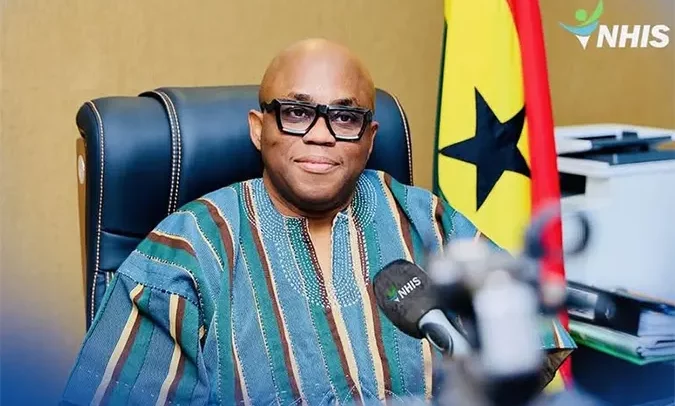
Dr. Victor Asare Bampoe
The National Health Insurance Authority (NHIA) has launched an intensified campaign to increase active membership of the National Health Insurance Scheme (NHIS) from the current 70 percent to 80 percent by the end of 2026.
Dubbed the “80 Campaign” and operating under the theme, “From 70 to 80 – Let’s Cover More,” the initiative forms part of efforts to advance the nation’s Universal Health Coverage (UHC) agenda.
The campaign is aimed at enrolling people who are not currently covered by the NHIS, retaining existing members and ensuring that membership translates into meaningful access to quality healthcare.
According to the NHIA, achieving 80 percent active membership is critical to protecting more Ghanaians from financial hardship when seeking healthcare.
The Authority said its focus would be on active membership rather than merely increasing the number of people registered on the Scheme.
The NHIS currently covers about 95 percent of disease conditions in the country, making active membership essential to ensuring that Ghanaians can access healthcare services covered by the Scheme.
The NHIA said its strategy would be anchored on four key measures: identifying uncovered populations, registering them, keeping their memberships active and protecting their access to healthcare.
As part of the campaign, the Authority said it would strengthen community mobilisation, public education, institutional partnerships, digital service delivery and targeted outreach programmes to make registration and renewal easier, particularly for underserved communities.
The initiative comes alongside measures to improve the value of NHIS membership and strengthen confidence among healthcare providers.
The NHIA has commenced the phased implementation of revised service tariffs for credentialed healthcare providers, beginning with a 50 percent increase in existing tariffs.
The first phase of the adjustment started in August 2026, with full implementation expected in October.
The Authority said the tariff adjustment followed a nationwide stakeholder review and was intended to reflect the actual cost of healthcare delivery, improve provider reimbursement and strengthen the long-term sustainability of the NHIS.
The NHIA also said it was intensifying efforts to eliminate illegal charges imposed on NHIS members at credentialed health facilities.
It stressed that there was no co-payment policy under the NHIS and that members should not be charged for services covered by the Scheme.
The Authority explained that timely payment of claims to healthcare providers was crucial to ensuring that NHIS members received the services to which they were entitled without being subjected to unauthorised out-of-pocket payments.
However, the NHIA disclosed that approximately 15 percent of claims currently reimbursed may be ineligible, resulting in estimated annual losses of about GH¢400 million.
It warned that without corrective measures, the losses could rise to nearly GH¢1 billion annually when the full tariff adjustment takes effect.
To address the challenge, the Authority is introducing the One-Time Attendance Code (OTAC), a digital claims verification system designed to confirm patients’ attendance and validate services provided before claims are reimbursed.
The system is currently being piloted in the Ahafo and Western North regions ahead of a nationwide rollout.
Meanwhile, the NHIA has released GH¢35.1 million to 107 districts implementing the Free Primary Healthcare (FPHC) programme.
Launched in April 2026, the programme provides population-based funding to districts for preventive healthcare services, including health screening, maternal and child healthcare, immunisation, treatment of common illnesses and public health education.
The NHIA said the FPHC programme was designed to complement the NHIS by focusing on prevention and early detection, while the NHIS continues to finance treatment and hospital-based care.
The Chief Executive of the NHIA, Dr. Victor Asare Bampoe, said the programme was expected to promote healthier lifestyles and facilitate early diagnosis, thereby preventing illnesses from becoming severe and more expensive to treat.
The Authority has also released 13 members of staff who had been seconded to the Ghana Medical Trust Fund (GMTF) for one year to support the establishment and operations of the Fund.
A Daily Guide Report