
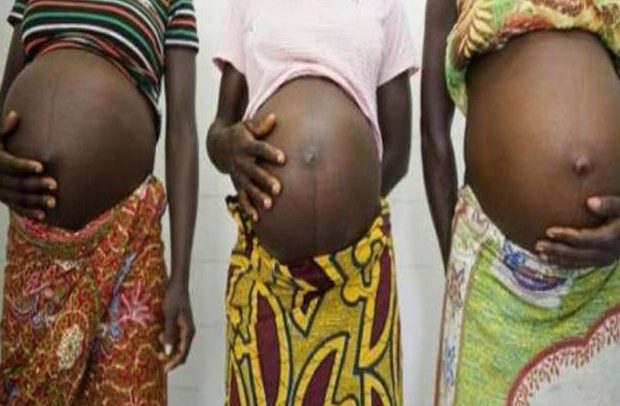
More than 53,000 teenage pregnancies have been recorded in health facilities across Ghana in the first seven months of this year, averaging about 7,300 cases every month.
The Ghana Health Service (GHS) says out of the figure, 1,501 cases involved girls aged 10 to 14, raising serious child protection concerns.
The Programmes Head for Adolescent Health and Development Programme of the GHS, Sherifa Mohammed, disclosed this at a National Multisectoral Dialogue on the Reduction of Teenage Pregnancy held in Accra.
The dialogue was organised by MSI Reproductive Choices Ghana (MSIG) with funding support from the United Nations Population Fund (UNFPA) under the theme, “Strengthening Multisectoral Action and Accountability to Prevent Teenage Pregnancy and Protect Adolescent Futures in Ghana.”
According to Ms. Mohammed, adolescent pregnancy remains one of Ghana’s most pressing public health and development challenges, with over 100,000 cases recorded annually. The 2022 Ghana Demographic and Health Survey shows that 15.2 percent of girls aged 15 to 19 have ever been pregnant.
She said data shows older teenagers aged 18 to 19 carry a higher burden at 28.2 percent compared to 8.1 percent among girls aged 15 to 17, while education remains a key protective factor.
Girls with no formal education recorded a 34.3 percent pregnancy rate compared to 12.3 percent for those with secondary education or higher, she added.
Regional Disparities
On regional disparities, Savannah Region recorded the highest prevalence at 25.9 percent, followed by Ashanti at 23.9 percent, North East at 23.5 percent and Bono East at 22.3 percent.
Greater Accra recorded the lowest at 6.0 percent, but Ms. Mohammed cautioned that due to its large population, the low percentage could translate into a higher absolute number of cases.
“People should not be misled into thinking Greater Accra is completely safe simply because it recorded the lowest percentage; due to its much larger population baseline, Greater Accra’s 6.0 percent rate can actually represent a larger absolute number of pregnant girls than Savannah’s higher percentage,” she said.
At the district level, Bole District in the Savannah Region recorded 230 births per 1,000 among 18 to 19-year-olds. In the Upper East Region, over 2,400 teenage pregnancies were recorded in five months, with Bongo District alone accounting for 522 cases.
She noted that while Ghana’s national average of 58.2 births per 1,000 girls aged 15-19 compares favourably to Nigeria at 86.4, Cote d’Ivoire at 92.1 and Sub-Saharan Africa average of 104.0, some hotspot districts far exceed regional figures, showing that a uniform national approach is insufficient.
Ms. Mohammed said the GHS runs the ‘Adolescent Girls Programme and Safety Net Programme’ which provides clinical care, education, counselling and support, but there is a mismatch between high-prevalence areas and programme reach.
While Northern Region leads with 15,131 registered girls, Savannah, with the highest pregnancy rate, accounts for only 4.7 percent of registrations with 2,506 girls.
Programmes Director of MSIG, Clara Nyarkoah Anim, said teenage pregnancy is not just a health issue but connected to education, access to information, gender and social norms as well as community support, stressing that the challenge lies in coordinated implementation of existing policies.
“Ghana already has policies, strategies, and programmes in place to address many of these teenage pregnancy issues,” she said, and added, “the main challenge lies in ensuring that these efforts are collectively, efficiently, and sustainably implemented and coordinated.”
Head of Gender, Health and Inclusion at the National Youth Authority, Naomi Brago Opoku-Agyemang, said the consequences extend beyond individual girls to school dropouts, limited employment and long-term vulnerabilities.
Programme Manager of the Alliance for Reproductive Health Rights, Isaac Nyampong, said access to accurate, age-appropriate sexual and reproductive health information and contraceptive services for sexually active youth remains critical to prevention.
The dialogue aimed to identify gaps in prevention, education, health services and accountability, and to produce a national communiqué with actionable commitments to protect adolescent futures.
By Janet Odei Amponsah