
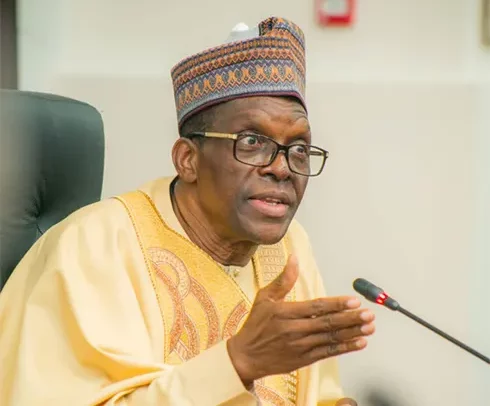
Alban Bagbin
President John Dramani Mahama has recommended a GH¢2.28 billion allocation for Parliament and the Parliamentary Service for the 2027 financial year, representing a reduction of GH¢669.6 million from the amount requested by the Legislature.
Parliament had submitted a budget request of GH¢2,953,139,666 for its operations in 2027, but the government has proposed GH¢2,283,561,480, citing limited fiscal space.
The proposed allocation represents a reduction of approximately 22.7 percent of Parliament’s original budget request.
The President’s recommendation was contained in a letter dated November 19, 2026, and read on the floor of Parliament yesterday by the Speaker, Alban Sumana Kingsford Bagbin.
In the communication addressed to the Speaker, President Mahama acknowledged receipt of Parliament’s letter dated October 19, 2026, which submitted the 2027 annual financial estimates of Parliament and the Parliamentary Service.
He said the estimates were being submitted for laying before Parliament, together with the government’s recommendations, in accordance with Section 15(a) of the Parliamentary Service Act, 1993 (Act 460), as amended by Act 763.
“Having regard to the limited fiscal space for 2027, the Government recommends a total allocation of GH¢2,283,561,480 for Parliament,” the letter stated.
The President subsequently requested Parliament to consider the government’s proposed allocation in its deliberations on the estimates.
Audit Service’s Estimates
However, President Mahama recommended the full budget request of the Audit Service for the 2027 financial year, covering compensation, goods and services, and capital expenditure.
The government has proposed an allocation of GH¢1,315,963,661 for the Audit Service, an amount which the President said fully meets the institution’s financial requirements for the year.
The recommendation was also contained in a communication from the President, read by Speaker Bagbin, on the floor of the House.
In the communication, President Mahama said the proposed allocation was in line with the government’s overall fiscal framework for 2027 and urged Parliament to consider the recommendation in its deliberations on the Audit Service’s estimates.
He explained that the Audit Service Board had submitted the institution’s annual estimates for 2027 in accordance with Section 27 of the Audit Service Act, 2000 (Act 584), and Regulation 45 of the Audit Service Regulations, 2011 (C.I. 70).
The President subsequently submitted the estimates to Parliament together with the government’s recommendations.
He stated that the proposed allocation of GH¢1.316 billion fully covered the Audit Service’s requests for employee compensation, goods and services, and capital expenditure.
Drawing the attention of members to the recommendation, Mr. Bagbin said the government had accepted the entire budget request of the Audit Service for consideration and approval.
He directed the relevant parliamentary committees to capture the full details of the estimates and the government’s recommendations in the Official Report.
Judiciary’s Estimates
In a separate communication, President Mahama also submitted the 2027 budget estimates of the Judiciary and the Judicial Service to Parliament, together with the government’s recommendations.
The estimates were submitted in accordance with Article 179(3) of the 1992 Constitution, following a request by the Chief Justice.
The President said the estimates had been forwarded for consideration in accordance with Article 179(4) and (5) of the Constitution.
Explaining the figures, Mr. Bagbin said the Judiciary had requested GH¢1,569,553,531.20 for the 2027 financial year.
He indicated that the difference between the Judiciary’s request and the government’s recommendation was approximately GH¢100 million.
The Speaker explained that the capital budget component of the Judiciary’s estimates was particularly relevant to Parliament’s consideration and approval, while the other components were submitted to the House for information in accordance with the constitutional provisions.
He consequently referred the estimates to the Committee on the Judiciary, with the leadership of the Budget Committee and the Finance Committee expected to support its consideration.
He urged the committees to take into account the constitutional provisions governing the submission and consideration of the Judiciary’s budget estimates.
By Ernest Kofi Adu, Parliament House