
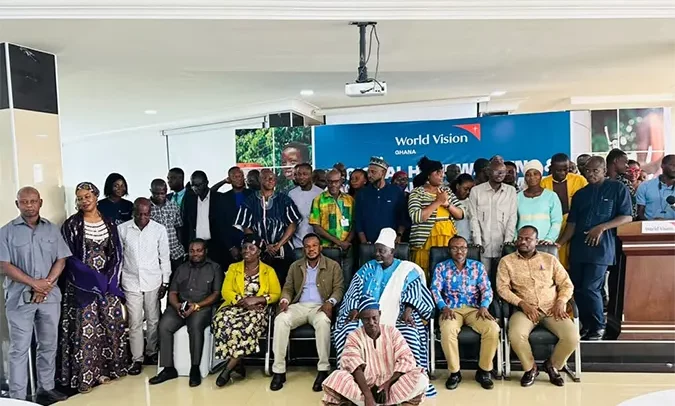
Stakeholders at the Regional WASH Summit in Tamale
World Vision Ghana, in partnership with the Community Water and Sanitation Agency (CWSA) and the Regional Coordinating Council (RCC), has organised the Regional Hand Hygiene and WASH Summit 2026 in Tamale to commemorate Global Handwashing Day.
Held under the theme “Be a Handwashing Hero: Awareness to Action,” the summit sought to move beyond awareness creation. It brought together policymakers, development partners, financiers, private-sector leaders, health professionals, civil society organisations, academics and youth representatives to explore practical actions to improve hygiene services, strengthen WASH systems and accelerate investment in sustainable hand hygiene infrastructure.
Mr. Rexford Bugre Yamdong, Northern Operations Manager at World Vision Ghana, said Global Handwashing Day was a reminder that handwashing with soap saves lives. However, he said, many people—particularly those in underserved communities, schools and healthcare facilities—still lack access to the basic infrastructure needed to practise proper hand hygiene.
He encouraged stakeholders to focus on leadership, policy and accountability; sustainable financing and investment; and climate resilience and innovation.
“World Vision Ghana recognises that no single institution can address these challenges alone. Our progress depends on the strength of our partnerships with government, CWSA, development partners, fellow humanitarian organisations, the private sector, academia, civil society and the communities we serve.
“This summit is therefore more than a commemorative event. It is a platform for collaboration, collective responsibility and action. I encourage each institution represented here to consider not only what they have learnt, but also what they can contribute to improving access to hand hygiene facilities in our schools, healthcare facilities and underserved communities,” he stated.
Mr. Yamdong noted that handwashing stations had been distributed to selected schools and healthcare facilities as part of this year’s commemoration to improve access to basic hygiene services.
“However, infrastructure alone is not sufficient. We must also ensure that water and soap remain available, facilities are properly maintained, and hygiene promotion continues, so that the intended benefits are sustained,” he added.
Mr. Bouri Yahaya of the Northern Regional Coordinating Council’s Environmental Health and Sanitation Unit presented an overview of the region’s WASH situation. He reported that the open defecation rate was 55.4 per cent, basic sanitation coverage was 49.9 per cent, and 14.8 per cent of households practised basic handwashing with soap.
He also said 64.4 per cent of the population had access to basic drinking water, while 18.7 per cent had access to safely managed drinking water.
Mr. Yahaya called for the provision of WASH facilities and water in schools, as well as dedicated funding for school WASH activities.
“Let us remember that handwashing with soap and clean water is a simple but powerful way to prevent diseases and protect our families and communities. Clean hands save lives, and prevention is better than cure,” he said.
FROM Eric Kombat, Tamale