

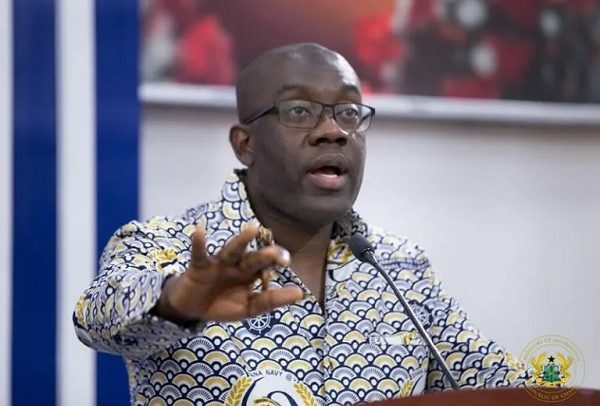
Kojo Oppong Nkrumah
Dissipation of public funds in situations of no-work-done across the country is a feature we have grappled with since independence.
We have also been grappling with misplaced developments, the relevance of some projects to the communities they are sited questionable.
So much has gone to waste or to enrich individuals to the detriment of the state kitty and affecting overall development goals.
When new governments take over the throttles of state following elections, they are able to harp on the failings of their predecessors with relish. They soon fall into the same pit as those who came before them.
The ‘No Plan, No Cash’ Bill, initiated through a Private Member’s Bill, is a step in the right direction for which the Member of Parliament (MP) behind it, Kojo Oppong Nkrumah, deserves commendation.
This is one subject which, it would appear, has cut across the party divide in the House. It is a very serious affair bordering on the finances of the state and so must have all supporting it regardless of party affiliations.
We have come a long way as an independent state but our unenviable record of allowing financial mismanagement and misplaced priorities to thwart our forward march should be a matter of concern.
Where the process has reached, there is no doubt in our minds that the necessary amendment to the legislation would come through.
The proposed amendment to the Public Financial Management Act, 2016 (Act 921) otherwise known as ‘No Plan, No Cash Bill’, when it finally takes off, will go a long way in ensuring a tighter fiscal discipline within state agencies, all things being equal.
Nowhere are such financial breaches common than the Metropolitan, Municipal and District Assemblies (MMDAs) where the Metropolitan Chief Executives (MCEs) sometimes operate what can pass for fiefdoms, their actions sometimes breaching the standards.
Even when damning audit reports unearth anomalies, the necessary sanctions to prevent repeat shows are often ignored.
The National Development Planning Commission (NDPC) has a critical role to play in our development agenda, a fact which should be considered as such.
Their roles are often overlooked, their interface with the state agencies where execution of projects feature a lot not taken into account.
Some of the financial anomalies that take place in our MMDAs are so mindboggling we wonder whether those who facilitate them understand the implications of their actions.
Not seeking approval for their development plans from the NDPC before accessing government funds is an anomaly which has featured in such transactions for far too long. Shouldn’t those who breach the yet-to-be amended legislation be sanctioned to give it traction?
Many loopholes, as observed by Kojo Oppong Nkrumah, had clogged the productive implementation of the Act in its 2016 form.
While we are excited about the pending amendment, the apprehension that its implementation would not be spared the scheming of the bad guys in the chain haunts us.
Technical as the amendment sounds, we want our fears to be allayed under the circumstances. In the light of the many cunning characters in the public and political service who would circumvent the new law to suit their parochial interests, those in charge of executing oversight responsibilities must be nationalistic in their assignments.