
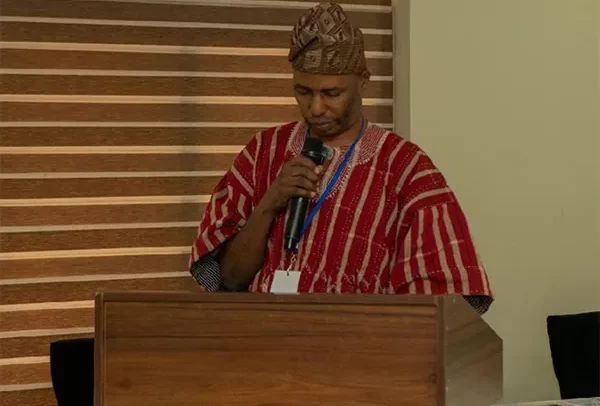
Dr. Abdulai Abukari
The Bono Regional Director of Health Services, Dr. Abdulai Abukari, has eulogised Sustainable Impact Makers International (SIMI) for its role in advancing health equity in Ghana and beyond, describing the NGO’s work as critical to saving lives of mothers and children.
Speaking at the opening of SIMI’s three-day summit themed “Health Equity in Action: From Periods to Parenthood, for All” in Sunyani, Dr. Abukari said health equity goes beyond buildings and medicine. He commended SIMI for its dedication and expertise in implementing health education initiatives, preventive health screening programmes, youth empowerment activities, and cross-sector collaborations designed to improve access to health information and services not only in Ghana, but also in Belize and the United States of America.
“Mobilising communities, creating awareness and promoting preventive care across diverse populations are the essential activities towards ensuring health equity in any country,” he added.
Dr. Abukari said it was commendable that SIMI is focusing on maternal health, menstrual health equity, youth empowerment and mental wellness – areas that are well aligned with government health priority programmes.
He noted that the summit’s activities were “timely and appropriate” and dear to both him and the Ghana Health Service as it works toward building a resilient health workforce for equitable service delivery.
The Bono Regional Minister, Joseph Addae Akwaboa, Esq., also called for community-driven health education and prevention as the surest path to achieving health equity across Ghana.
The minister said health equity means every Ghanaian, regardless of location or status, must have a fair chance at good health. “As you are doubtless aware, health equity means that every person — whether you live in Accra or a rural village like Wawasua, whether you are rich or poor, whether you are young or old — you deserve the same fair chance to be healthy.
“But today, we know the gaps are real. It is an undeniable fact that some communities still walk miles for basic care. Some mothers still give birth without a skilled provider. Some children miss vaccines not because we don’t have them, but because the information didn’t reach their homes,” Mr. Akwaboa stated.
The Regional Minister emphasised that health education must go beyond clinic walls and into homes, schools and markets. “Health education is not just posters on clinic walls. It is the grandmother and aunty in the market who teaches about safe drinking water. It is the teacher who talks to students about nutrition and mental health. It is the radio programme in our local dialect that explains how to prevent malaria, hypertension, and diabetes,” he said.
By Prince Fiifi Yorke