
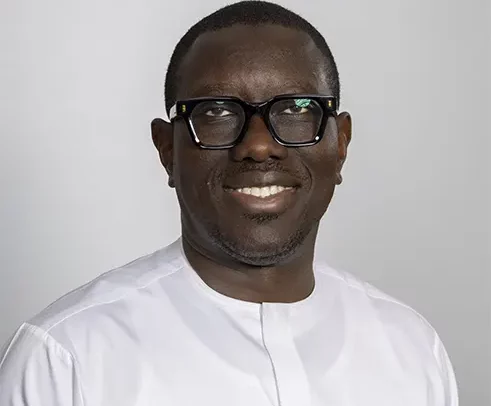
The writer
Last week, President Mahama told the Western North Regional House of Chiefs that enforcement against illegal mining must go hand in hand with alternative livelihoods. He spoke of senior high school students in mining pits, of communities and some chiefs resisting NAIMOS, and of a US$10 billion investment in job-rich sectors that he believes will steer young people away from galamsey.
Within a day, Awula Serwah of Eco-Conscious Citizens asked publicly whether, with the Army and Navy at the Commander-in-Chief’s disposal, the galamseyers are stronger than the Ghana Armed Forces.
There is a history to her question. In opposition, senior executive appointees of today’s government, Sam’s George and Ablakwa among them, argued that a Commander-in-Chief who truly wanted galamsey ended could do it in a matter of days to four months. President Akufo-Addo put the Armed Forces at the front of the fight in 2017. Two different parties, the same faith in force, and the same pits reopening once the soldiers left.
Are both sides not missing something from hindsight’s diagnosis and prescription? Galamsey is neither a law and order problem that one determined push can clear, nor a poverty problem that jobs will dissolve. It is a protected criminal economy, and its protection runs through communities, chiefs, security services, political parties and, uncomfortably, the state’s own balance sheet. Until we call it that, we will keep fighting it at the edges.
No carrot outbids gold
The President’s question, what alternative do we have for them, is a fair one. The honest answer is that no legal livelihood comes close. A young man on a productive pit can earn more in a week than many rural workers earn in months, in cash, daily. No tourism job or skills certificate competes with that.
The clearest evidence is not in the pits but on the farms. Across the cocoa belt, farmers have been selling cocoa and oil palm land to galamsey operators, some willingly, some under pressure. In 2024 the General Agricultural Workers’ Union put the damage at more than 100,000 acres of cocoa and over 30,000 acres of oil palm. If galamsey can outbid cocoa, the most established livelihood in rural Ghana, it will outbid any new programme the state designs
Paying people to repair the damage has not helped either. Reclamation stipends ran on short contracts, were paid late, were often filled through party channels, and sat beside pits that paid far more. Livelihood programmes can catch those already pushed out by enforcement and keep the next cohort of teenagers from going in. They cannot pull people out. A strategy that leads with them has the sequence backwards.
The youth are not the engine
The second error concerns who we target. The young people in the pits are the labour. They are the most replaceable part of any criminal economy. Arrest a thousand diggers and the financier recruits a thousand more. The President disclosed that hundreds of young people are awaiting trial. The more useful number is how many financiers, excavator owners, illegal buyers and protectors are.
The engine of galamsey sits above the pit. Someone imports the excavators and moves them past checkpoints. Someone supplies diesel and mercury. Someone leases the land. Someone buys the gold, smuggles and washes it into the formal system. And someone, in uniform or in a party office, makes sure a raid is known before it happens. Communities can name these people.
The political arithmetic
Capacity is a constraint, but political will is the binding one, and it is weak because exercising it is expensive. The numbers are frightening. Estimates of those directly engaged in galamsey commonly run above a million. Add their dependants, the traders who supply and feed them, and the landholders who profit, and we have a constituency large enough to decide elections in mining districts that both parties need.
Then there is elite capture, and it crosses party lines. Financiers and protectors are found in both major parties, so whichever party governs discovers that serious enforcement means confronting its own people. Each side demands force in opposition and soon learns its limits in office.
The chiefs: landlords and vote brokers
No part of this arithmetic is perhaps more delicate than the position of our chiefs, and no part is discussed with more caution in public.
Galamsey cannot happen without land, and in much of the mining belt the land is held in trust by stools, skins and families. A financier who wants to dig a cocoa farm or a riverbank usually needs the blessing of whoever controls that land. That blessing is often paid for, through an outright lease, a share of the proceeds or a quiet arrangement that never appears in any record. Some chiefs are therefore not bystanders to galamsey. They are its landlords.
The same chiefs are also among the most valuable political assets in the country. Candidates seek their endorsement, ministers visit their palaces, and a chief’s word can shift the vote of an entire traditional area. In mining constituencies the landlord and the vote broker are frequently the same person. To prosecute a chief who leases land for galamsey is to risk the votes of everyone who owes him allegiance. It is a political cost that few governments, of either party, have shown themselves prepared to bear.
Arresting a youth on a pit is cheap; arresting a chief is not. Chieftaincy carries cultural weight that politicians are reluctant to offend, and an arrest can be read as an insult to a whole people rather than as the enforcement of law against one man. Hence, the country appeals. Same week, President Mahama asked the Western North chiefs for help, while acknowledging that some traditional authorities have joined the youth in resisting NAIMOS. Some of those confrontations have ended with soldiers opening fire and lives lost, the price of pointing force at the bottom while the landlord goes untouched. An appeal is not accountability, and the chiefs who profit from galamsey know the difference.
None of this is an indictment of chieftaincy. Many chiefs have stood against galamsey at real personal cost, and senior traditional rulers have publicly warned their subordinates against it. That is precisely why the institution should welcome a clear line. A chief who leases land in a river buffer, a forest reserve or a productive cocoa farm should face the same law as any financier, and the Houses of Chiefs should be prepared to discipline their own. Until a single well-placed chief is held to account, every appeal to traditional authorities will sound, in the communities that know better, like a request rather than a warning.
The state’s own stake
The most uncomfortable part is the money. Ghana’s gold exports more than doubled in 2025 to about US$21 billion, and according to the Institute of Fiscal Studies the small-scale sector accounted for more than half of that, roughly US$10.8 billion. GoldBod has been credited with the surge and with the support it gave to the cedi and our reserves. Yet the same analysis noted that the mineral royalties collected in 2025 came entirely from large-scale mining. Nothing came from the small-scale sector.
I am not suggesting that every ounce of small-scale gold is illegal. But few believe that licensed, compliant operations alone produced more than 100 tonnes in a single year. A substantial share came out of the rivers and forest reserves we say we are protecting. In effect, the state has become the largest buyer of galamsey gold while presenting itself as its enemy. When the activity poisoning our rivers is also propping up the currency, enforcement at the fringes is no surprise. Raids are visible, burning excavators makes good television, and none of it touches the revenue, the networks or the land deals.
What would confronting it actually mean?
Once galamsey is understood as a protected criminal economy, the strategy changes, and the GH¢400 million proposed for the fight in the 2027 budget should be judged by where it is aimed.
First, we have to accept that a million people cannot be criminalised, and that a few hundred must be. The many should be given a real route into legal small-scale mining: fast licensing, community mining schemes that actually function, geological data so people are not digging blind, mercury-free processing and a guaranteed buyer at a fair price. It is the only alternative that competes on income.
Second, enforcement should be aimed at the few. That means intelligence-led targeting of financiers, equipment importers, illegal buyers and their protectors, backed by asset seizures that make the business unprofitable. Taking a financier’s fleet and putting him before a court does more than a hundred raids on pits.
Third, some lines must be absolute. Rivers, forest reserves and productive cocoa land should be off limits, with both the seller and the buyer of farmland for mining held liable, and chiefs who lease such land made personally accountable. If cocoa farms can be sold to galamsey operators without consequence, no programme will save the cocoa belt.
Fourth, the gold trade must answer for its sources. GoldBod now says no amount of foreign exchange is worth a lost forest, and plans to reclaim 200 hectares over two years. The scale does not match the damage. Against more than 40,000 hectares of cocoa land alone, that is a gesture, not a remedy, unless the same board can prove the gold it buys did not come from the forests it is restoring.
Finally, the parties need a compact. As long as galamsey remains a stick each side uses to beat the other, neither will bear the cost of confronting it in office. A cross-party agreement to prosecute financiers and politically connected actors, whichever party they belong to, would take that stick away.
The real test
Awula Serwah’s question deserves a straight answer. The galamseyers are not stronger than the Ghana Armed Forces. What is stronger is the web of interests that protects them, and that web runs through places no soldier can be ordered into: party offices, palaces, buying centres and the national accounts.
The measure of any government’s seriousness is whether a well-connected financier, from its party, loses his assets and goes to prison. Until that happens, we will keep playing at the fringes, and our rivers will keep paying the price.
By Nana Attobrah Quaicoe