
Liz Ricketts
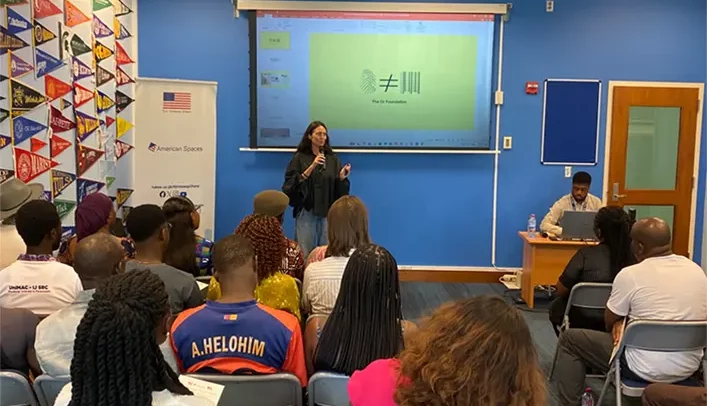
Co-Founder and Executive Director of The OR Foundation Ghana, Liz Ricketts, has called for Extended Producer Responsibility (EPR) policies on textile waste to be made globally accountable to support communities like Kantamanto.
Speaking at the Freedom250 event on the theme “Rethinking Fashion: Lessons from The OR Foundation” in Accra, Ms. Ricketts said while EPR is a necessary move to acknowledge the fashion industry’s textile waste crisis, current policies are flawed.
“Concern now is that there is a gap in understanding. The idea is sound, but the way the policies are being constructed don’t take communities like Kantamanto into account,” she said.
According to her, Kantamanto is one of the largest second-hand clothing markets in the world and where most of the clothing covered by EPR will eventually end up.
“We are calling for EPR policies to become what we call globally accountable, meaning that the fees that are paid by brands should travel with the clothes to support the true end of life, and through that support, then that’s when we can actually understand if this policy is making impact,” she explained.
“If we don’t extend the policy to the true end of life, then unfortunately, all those policies will do is subsidise exports and not actually document or understand the impacts.”
Ms. Ricketts said The OR Foundation is ready to ensure EPR funds reach the informal workers who truly deal with textile waste at its end of life.
“Most of the people who are doing the work are in what is considered the informal economy, and, unfortunately, sometimes there’s bias against supporting the informal economy because of questions around ‘how would the money flow?’,” she said.
She said Kantamanto should not just be seen as a place of resale, but as a global leader in textile circularity that deserves investment.
“Kantamanto should be fit for what it is, which is a global leader in textile circularity. So for us, Kantamanto shouldn’t just be a place of resale, but also a place where we are investing in upcycling as an industry,” she stated.
She lamented the poor conditions in the market, noting that with over 26,000 individuals working there, there are only three bathrooms.
“At the most basic level, people deserve better than that. They deserve to be comfortable in their workspace. They deserve also to be working in a space where they’re not going to have their health impacted,” she stressed.
Ms. Ricketts also announced the 5th annual Obroni Wawu (OWO) October Festival scheduled for Sunday.
She said the all-day event from 12 p.m. to 8 p.m. will feature a fashion show, workshops, weaving with Tamatini recycled yarns, live screen printing, talks, exhibitions, and performances from artistes including Sister Derby.
She added that the highlight, the drip contest, will allow anyone to show up in their best upcycled or second-hand fit to win prizes.
By Prince Fiifi Yorke