
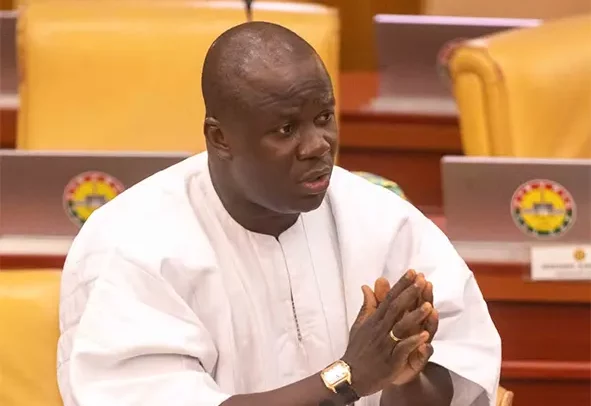
Samuel Abu Jinapor
Member of Parliament (MP) for Damongo, Samuel Abu Jinapor, has criticised the Mahama administration over what he describes as a persistent failure to translate approved budget allocations into actual spending, warning that poor fund releases are undermining government programmes.
Mr. Jinapor argued that the reported fiscal surplus of 1.4% of Gross Domestic Product (GDP) was achieved largely through underspending rather than improved fiscal management, with several government interventions receiving less funding than Parliament had approved.
According to him, the government had recorded an expenditure shortfall of approximately GH¢20 billion by October 2026. The gap rises to GH¢34.6 billion when arrears and debt repayments are taken into account.
He cited the School Feeding Programme, the Livelihood Empowerment Against Poverty (LEAP) programme and the Capitation Grant as examples of interventions affected by the funding gaps. He said the three programmes received GH¢1.8 billion out of the GH¢3.1 billion programmed for them by October.
He also questioned why the GH¢50 million allocated annually to support lifeline electricity consumers in 2025 and 2026 had not been released, despite the same amount appearing again in the 2027 Budget.
“The figures raise questions about the government’s ability to execute its own budget,” Mr. Jinapor said. “Allocations on paper do not necessarily translate into resources reaching institutions and beneficiaries.”
Background
The criticism follows months of debate over budget execution under the Mahama administration, which took office in January 2025 after winning the 2024 general election on promises to restore fiscal discipline, stabilise the cedi, reduce inflation and cut wasteful spending.
In July 2026, during debate on the 2026 Mid-Year Budget Review, Mr. Jinapor described the implementation of the 2026 Budget as the worst-performing since 2016.
At the time, he pointed to figures showing that against planned expenditure of GH¢158 billion, government spent only GH¢127 billion — a shortfall of over GH¢30 billion, or about 20% below target.
He argued then that the Mid-Year Review focused largely on repeating commitments made in the 2025 Budget instead of providing a comprehensive account of implementation as required under the Public Financial Management Act.
The Institute for Fiscal Studies (IFS) raised similar concerns in its own analysis of the Mid-Year Review, finding that government expenditure in the first half of 2026 fell GH¢35.6 billion short of the amount programmed. The IFS warned that the underspending had affected the credibility of the budget and constrained development spending.
The government has consistently rejected claims of underspending.
Presenting the 2026 Mid-Year Budget Review, Finance Minister Dr. Cassiel Ato Forson said the government had adhered to the principle of spending only available resources and ensuring value for money.
Dr. Forson said substantial resources had been deployed across priority sectors, including GH¢48.8 billion paid as compensation to public sector workers, GH¢21.5 billion in domestic interest, GH¢11.5 billion released for capital expenditure, and GH¢5.3 billion used to clear legacy arrears inherited by the administration.
He argued that before the current administration assumed office, Ghana faced a rapidly depreciating cedi, inflation above 50%, a junk sovereign credit rating and loss of access to international capital markets.
Mr. Jinapor, a former Minister for Lands and Natural Resources under the Akufo-Addo administration and now Ranking Member on Parliament’s Foreign Affairs Committee, has repeatedly framed the debate as “paper economy versus pocket economy” — arguing that headline macroeconomic gains must be judged by whether ordinary Ghanaians feel relief in their daily lives.
He maintains that the success of the 2027 Budget should ultimately be judged by its impact on the pockets and livelihoods of Ghanaians, rather than the promises contained in the document.
A Daily Guide Report