
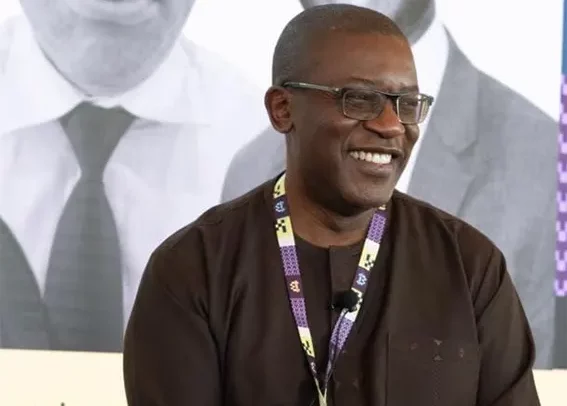
Solomon Asamoah
The Supreme Court (SC) on Wednesday ruled that a trial court can determine the manner, mode, and sequence in which an accused person calls his witnesses when he is called upon to mount a defence.
A five-member panel of the court, presided over by Justice Issifu Omoro Tanko Amadu, in a ruling on an application for certiorari to quash a similar High Court order, said the trial court’s order was properly made under powers expressly conferred on it by Parliament.
Former Chief Executive Officer of Ghana Infrastructure Investment Fund (GIIF), Solomon Asamoah, had challenged the order of the High Court requiring him to first mount the witness box before he could call his subpoenaed witnesses to testify for him.
This, he argued through his lawyers, infringed on his right to a fair trial guaranteed under Article 19(2)(g) of the 1992 Constitution and he sought the court to strike it down.
But the court, in its ruling on Wednesday, rejected the claim, pointing out that the trial court made the order in a lawful and reasoned exercise of the power granted to it by Parliament.
The apex court held that the High Court’s order respected every choice the constitution leaves Mr. Asamoah as far as mounting a defence was concerned.
It further pointed out that the court had control over the mode of the trial in respect of what case to call, whom to call and when to testify.
“What she declined to do was hand over to the applicant (Mr. Asamoah) the power that belongs to the court, which is tantamount to the order in which the court will receive evidence,” the Supreme Court held.
The court, therefore, dismissed the application for certiorari and directed that the trial proceeds in accordance with law and the direction of the trial court.
The panel was made up of Justices Issifu Omoro Tanko Amadu (president), Samuel Asiedu, Janapare Adzua Bartels-Kodwo, Edward Amoako Asante, and Anthony Forson Jnr.
Mr. Asamoah and Prof. Ameyaw-Akumfi are standing trial for allegedly causing a $2 million financial loss to the state by investing it in the Sky Train project.
Order
The trial court, presided over by Justice Audrey Kocuvie-Tay, on October 29, ordered the accused persons to mount the witness box and testify before they will be allowed to call any witnesses.
On November 12, the court reiterated this position, noting that under conventional practice in Ghana’s criminal jurisprudence, an accused person who elects to be heard is expected to testify first before calling other witnesses.
Justice Kocuvie-Tay further held that it was logical for an accused person to open his defence by giving his own account before calling other witnesses to corroborate that defence.
Certiorari
His lawyers subsequently invoked the Supreme Court’s supervisory jurisdiction, seeking certiorari to strike out the trial court’s orders.
Moving the application on Tuesday, his lead counsel, Victoria Barth, said the impugned order of the trial court was made in excess of jurisdiction, arguing that the judge does not have the authority to make that order.
She also contended that the directive given by the trial court violates Mr. Asamoah’s constitutional right to a fair hearing and right to remain silent until deciding to testify under Article 19(2)(g).
Opposition
The application was opposed by Sefakor Batse, a Principal State Attorney, who argued that the 1992 Constitution does not say the manner in which an accused may call his witnesses.
She pointed out that the fact that Mr. Asamoah does not agree with the manner in which the judge is asking him to testify does not result in an error.
BY Gibril Abdul Razak