
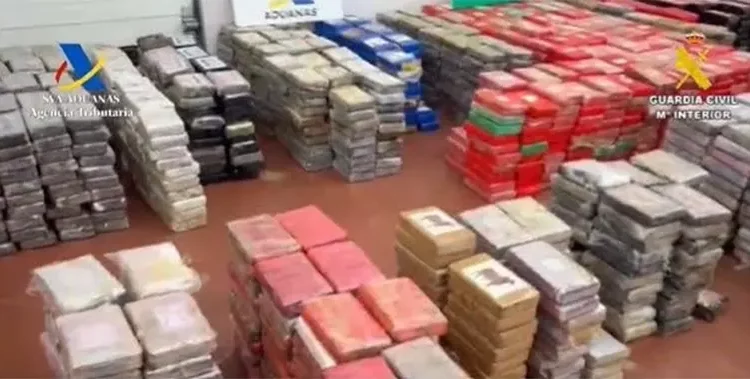
The busted cocaine
Two unidentified men have been arrested in Valencia, Spain, in connection with the seizure of 2.6 tonnes of cocaine shipped from Ghana hidden in crates of coconuts.
While the names of the suspects have been withheld, the concealment was found in two containers that left Tema Port on August 2, 2026 and reached Valencia 20 days later.
This drug bust joins the growing list of multi-tonne seizures abroad that have put Ghana’s ports, and its reputation, under intense pressure.
Details were released on Wednesday, November 11, 2026, three months after the operation itself.
According to Spain’s Tax Agency and the Guardia Civil, when the containers arrived in Valencia, Spanish customs flagged them as high-risk during routine trade checks.
A search revealed that the coconuts were packed in wooden crates fitted with false bottoms. Underneath, officers found parcels of white powder. Tests confirmed it was cocaine.
Instead of seizing the drugs immediately, investigators are said to have removed the cocaine, resealed the containers, and let them move on under surveillance to catch the receivers, not just the cargo.
Two refrigerated lorries soon came to collect them. Officers followed the trucks to a warehouse at the La Juaida industrial estate in Viator, Almería.
As the cargo was being unloaded, they moved in and arrested two men — described as the suspected importer and the person supervising the unloading.
Since March 2025, 28 narcotics-related cases linked to Ghana including 11 involving cocaine, with published weights totalling about 15.8 tonnes and an estimated street value of US$1.3 billion to US$1.7 billion have been counted.
The turning point came in March 2025 at Pedu Junction near Cape Coast, when security agencies stopped a tipper truck carrying more than 3.3 tonnes of cocaine concealed beneath sand. It was the largest seizure ever made on Ghanaian soil, and it signalled that the trade had moved from suitcases to industrial scale.
Just a month later, Narcotics Control Commission (NACOC) officers at Accra International Airport found nearly 90kg of cocaine hidden in wooden boxes declared as traditional artefacts, bound for the Netherlands. It was a reminder that the old methods had not disappeared — they were now running alongside the new ones.
In June 2025, Dutch customs in Amsterdam opened a timber shipment from Tema and found 4.5 tonnes of cocaine inside — the biggest seizure in the history of that port.
By November that same year, Belgian officers in Antwerp had found 2,829kg of cocaine hidden in cassava flour from Tema, and a month later another 1,158kg at the same port. In the space of seven months, Ghana had become the fifth-largest country of origin for cocaine seized at Antwerp, Europe’s main cocaine gateway, behind only Ecuador, Costa Rica, Brazil and Colombia, and the only African country in the top five.
In April 2026, Australian border officials in Sydney discovered 320kg of methamphetamine packed inside bags of charcoal exported from Ghana, a haul valued at close to A$296 million.
In August 2026, police at Tema Harbour found 866 parcels of suspected cocaine hidden in sacks of gari at a warehouse, bound for London, and arrested a Dutch national and two Ghanaians.
A month later, French customs at Dunkirk opened a container declared as plastic waste from Ghana and found nearly 3.9 tonnes of cocaine, valued at about €225 million.
Just weeks after Dunkirk, on October 31, a Syrian national arriving from Accra was arrested at Beirut’s Rafic Hariri International Airport with about 40kg of suspected cocaine hidden in two suitcases — a return to the airport courier route, even as the sea route kept growing.
By Prince Fiifi Yorke