
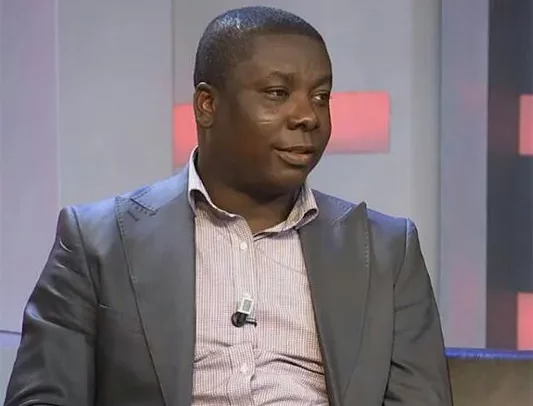
Gideon Boako
The Deputy Ranking Member on Parliament’s Finance Committee and Member of Parliament (MP) for Tano North, Dr. Gideon Boako, has questioned the government’s claims of strong economic performance, arguing that an economy cannot be described as healthy if it continues to borrow to finance recurrent expenditure such as public sector salaries and the Free Senior High School (Free SHS) programme.
According to him, the government’s reliance on borrowing to meet basic obligations raises concerns about the sustainability of the country’s public finances despite official claims of macroeconomic improvement.
Dr. Boako maintained that a genuinely strong economy should be capable of generating sufficient domestic revenue to finance key government programmes without resorting to borrowing for routine expenditure.
He said while the government continues to project confidence in the economy, the realities reflected in its financing decisions tell a different story and expose underlying fiscal weaknesses.
Speaking during a discussion on the 2026 Mid-Year Budget Review on Peace FM, Dr. Boako said the government’s actions were inconsistent with its claims of economic recovery.
“An economy described as doing well should not be borrowing to pay salaries and fund Free SHS as we are seeing under this government,” he said.
On Ghana’s reported inflation rate, he argued that rising food prices being experienced by consumers do not reflect the official figures.
The Tano North MP said the cost of essential food items, particularly tomatoes, suggests that many Ghanaians continue to face significant cost-of-living pressures despite government assertions that inflation has declined to around five per cent.
Dr. Boako argued that the disconnect between official economic indicators and everyday market prices raises legitimate concerns about the true state of the economy and the lived experiences of ordinary citizens.
He further stated that current economic conditions are exposing what he described as inconsistencies in the government’s narrative on the country’s economic performance.
He pointed at the price of tomatoes in Accra as an example.
“A piece of tomato sells at GH¢10 in most outlets in Accra, yet we are told inflation is around five per cent. What you make of that is as good as what I am thinking. The settings are exposing a lot about the government,” he said.