
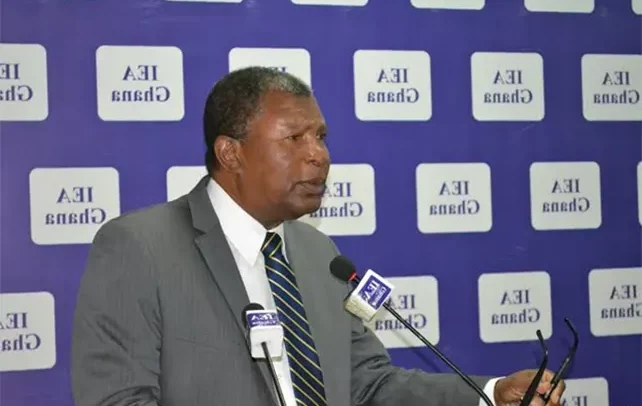
Dr. Charles Mensah, Board chairman IEA
The Institute of Economic Affairs (IEA) has described Ghana’s decision to pursue a partnership with the BRICS as a significant opportunity to strengthen the country’s economic and diplomatic ties, and attract investment for economic growth.
A statement issued by the IEA said the initiative aligned with Ghana’s national development objectives hence partnership with BRICS will not only offer an opportunity to strengthen its economic diplomacy but also explore new markets, strengthen trade relations and deepen cooperation with emerging centres of economic activity,
“The IEA regards the Government of Ghana’s decision to pursue a partnership with BRICS as a significant opportunity to strengthen the country’s economic diplomacy, diversify its international partnerships, deepen South-South cooperation and advance the national development objective of structurally transforming the economy to benefit all,” the statement said.
“Ghana must continue to strengthen its engagement with emerging centres of economic activity, technological advancement and international cooperation, while establishing the necessary institutional and policy frameworks to maximise the benefits of these engagements for national development. The IEA, therefore, welcomes the initiative and supports the steps being taken to secure Ghana’s place within the BRICS partnership framework,” it added.
It said the decision was consistent with the country’s foreign policy position of positive neutrality and non-alignment, adding that the country had the right to independently determine its international partnerships in pursuit of national development.
The IEA said the observation was relevant to Ghana, arguing that the country could not afford to rely on a narrow range of international relationships to secure its future stressing that strategic diversification was not an expression of hostility towards any country but rather a prudent exercise.
It said BRICS, with a combined population of more than 3.5 billion people and about 30 per cent of global economic output, could provide Ghanaian businesses with access to new markets, diversify export destinations and create additional commercial opportunities.
The IEA also identified development financing as another area in which Ghana could benefit, explaining that engagement with BRICS countries and relevant institutions, including the New Development Bank where applicable, could provide additional financing opportunities for infrastructure and productive-sector development.
It said Ghana needed to move beyond an economic model that relied heavily on exporting unprocessed or minimally processed commodities and instead attract investment and expertise into agro-processing, mineral beneficiation, manufacturing, energy and transport infrastructure.
“A BRICS partnership should complement, not replace, these existing arrangements. Ghana stands to benefit significantly by cooperating with different partners in trade, finance, education, technology, infrastructure and security while maintaining its independence in determining national policy,” it stated.
By Ebenezer K. Amponsah