
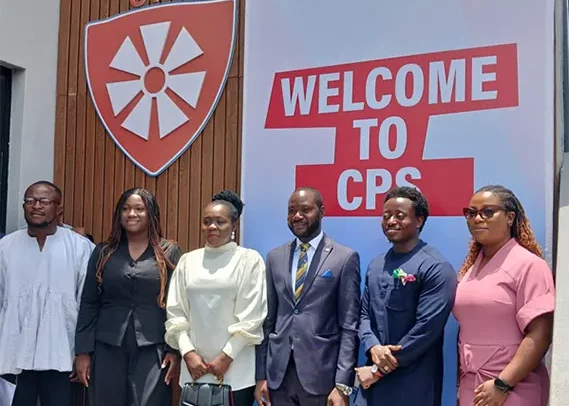
Isaac Agyiri Danso (2 R) and others
The Centre for Policy Scrutiny (CPS) has called for a modification of the country’s tax policies to address persistent revenue shortfalls, improve equity, and restore public trust in the system.
Speaking at a policy discussion, tax consultant Isaac Agyiri Danso cited data from the Ministry of Finance and noted that although citizens often feel overtaxed, the country is still not generating enough revenue relative to its economic potential.
“According to projections, the now-abolished COVID-19 levy was expected to generate about GH¢6.6 billion in revenue, while the betting tax was also expected to bring in billions annually.
However, actual collections have consistently fallen short of expectations,” he said.
This gap, Mr. Danso explained, points to deeper structural challenges in the nation’s tax system, including weak compliance, over-optimistic forecasting, and inefficiencies in administration.
Data presented by him showed that lower-income groups were contributing a higher percentage of their income – sometimes up to 8% – compared to higher earners, raising concerns about equity.
“We are dealing with a serious equity challenge. The structure of some taxes places a heavier burden on those with lower incomes,” he noted.
He also criticised the country’s revenue projections, describing them as overly ambitious. In his findings, tax compliance rates were as low as 2%, far below expected targets.
He stressed the need to strengthen revenue forecasting capacity to avoid unrealistic expectations that undermine policy credibility.
“We must improve how we forecast revenues. The gap between projections and actual collections has been too wide over the years,” he said.
Despite these concerns, he acknowledged the importance of modernising Ghana’s tax system, especially in response to the growing digital economy.
He described digital taxation, known as the E-levy, as a “futuristic” approach that aligns with global trends, noting that over 50 countries are already implementing similar measures.
To address the challenges, he proposed several reforms, including institutionalising public consultations before introducing new taxes; strengthening transparency and accountability in tax policy decisions; improving efficiency in tax collection systems; and expanding the tax base while ensuring fairness.
The tax consultant also emphasised the importance of linking tax collection to visible development outcomes to rebuild trust between citizens and the state.
“Taxation is a social contract. When people see value in what they pay, compliance improves and governance is strengthened,” he added.
While acknowledging the need to mobilise more domestic revenue for development, he cautioned against overburdening citizens without corresponding improvements in service delivery.
He concluded that Ghana must strike a balance between increasing revenue and ensuring fairness, transparency, and accountability in its tax system.
By Vera Owusu Sarpong & Florence Asamoah Adom