
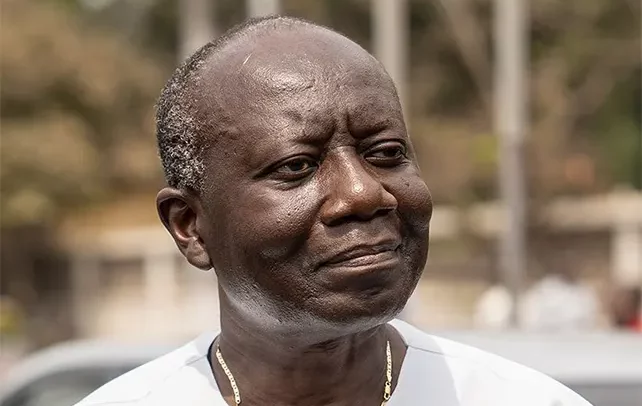
Ken Ofori-Atta
The Office of the Special Prosecutor (OSP) has responded to suggestions that former Finance Minister Ken Ofori-Atta should be tried in absentia, indicating that such a move can only proceed after an accused person has been formally charged, duly notified, and refuses to appear before court.
Clarifying the process for trial in absentia, the OSP, in an official explainer released yesterday, cited Article 19(3) of Ghana’s 1992 Constitution which permits a criminal trial to proceed without the accused present only if that person either refuses to appear after being duly notified, or is removed for disrupting proceedings.
The OSP stressed the sequence is strict: first, charges must be filed. Second, the court must grant permission to serve the accused.
Third, the summons and charge sheet must be transmitted through official channels — from Ghana’s Attorney General to the competent authority abroad. Fourth, the accused must be personally served. Fifth, proof of service must return to the Ghanaian court.
“Due notification does not mean a phone call, social media, or telling the person’s lawyers,” it explained. “It means formal, personal service through the established legal channels. Without proof of service, a court cannot conclude the accused has been duly notified.”
The clarification comes as the Office of the Special Prosecutor has charged Ofori-Atta and nine others with 28 counts of corruption and corruption-related offences in the SML case.
Prosecutors have already secured court approval to serve Ofori-Atta in the United States.
The documents have been sent to Ghana’s Attorney General, who has forwarded them to the US Department of Justice (DOJ) for service.
What remains is proof that Ofori-Atta has been personally served. Once that proof returns through the DOJ to Ghana’s Attorney General and is filed before the court, the court will then give him a reasonable opportunity to appear.
Only if he refuses or fails to appear after being duly served, then the court invoke Article 19(3)(a) and order trial in absentia.
“Filing charges alone does not trigger trial in absentia,” a staff of the OSP added. “The constitutional trigger is a person who has been properly charged and properly notified but chooses not to come before the court.”
The process differs from cases where trial has already begun. If an accused who was present at the start later absconds, like in the Sedina Tamakloe-Attionu case, notice is deemed and the trial can continue.
For now, Ofori-Atta’s case remains at the service stage. Until proof of service is filed, he cannot be said to have been duly notified within the meaning of Article 19(3)(a).
A Daily Guide Report