
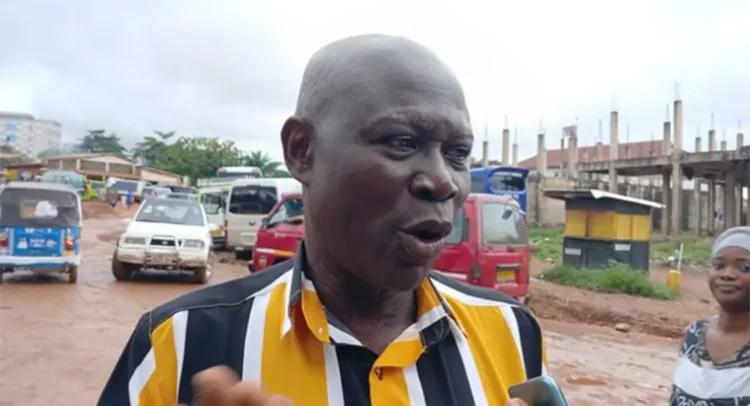
Albert Boamah
The Sofoline Branch Chairman of the Ghana Private Road Transport Union (GPRTU), Albert Boamah, has expressed deep concern over what he describes as increasing disregard for approved transport fares by some commercial drivers, warning that the development is worsening conditions for passengers and undermining order in the transport sector.
According to him, the situation has been aggravated by the activities of unregulated trotro operators who do not belong to any recognised transport union but are allowed to load passengers along the roadside.
Speaking in an interview, Mr. Boamah noted that these drivers have taken advantage of the system to charge arbitrary fares, a practice he said is creating hardship for commuters and contributing to congestion at loading points.
“The rate at which passengers are paying huge amounts is really alarming,” he stated.
He explained that the absence of a single regulatory framework has made it difficult to monitor and control the activities of such operators, thereby encouraging indiscipline within the sector.
Mr. Boamah, therefore, called for all transport operators, including independent drivers and floating unions, to be brought under one umbrella—preferably the GPRTU—to ensure effective regulation and enforcement of approved fares.
He maintained that a unified system would help streamline operations and restore discipline in the transport business.
“Other transport operator unions claim that because they are many, no one can check them. But the GPRTU is the main transport operator with the men and mandate to regulate,” he stressed.
The union leader also raised concerns about the conduct of some officers of the Motor Transport and Traffic Directorate (MTTD), alleging that despite their presence at loading points, some drivers still engage in short-distance loading and overcharging.
He suggested that in some instances, enforcement officers allegedly look on while the practice continues, claims he attributed to possible inducements from drivers.
Mr. Boamah further blamed some passengers for enabling the trend, saying their willingness to pay inflated fares and defend errant drivers was worsening the situation.
“Sometimes passengers must also be blamed. If a commercial driver asks for a huge amount that is not the approved fare, and you try to defend the passenger, the same passenger will support the driver and turn against you,” he lamented.
He called on the government, transport authorities, and other stakeholders to take urgent steps to enforce strict compliance and ensure that all operators are brought under a unified regulatory structure.
He added that such measures would help curb irregularities, enforce fare discipline, and restore sanity to the public transport system.
FROM David Afum, Kumasi