
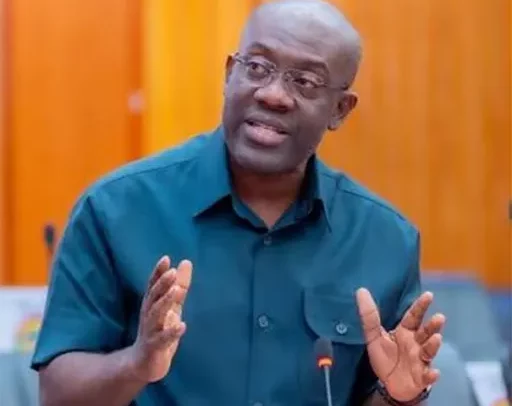
Kojo Oppong Nkrumah
The Ranking Member on Parliament’s Economy and Development Committee, Kojo Oppong Nkrumah, has challenged the country’s current approach to assessing debt sustainability, arguing that Ghana’s heavy reliance on the debt-to-GDP ratio provides an incomplete and potentially misleading picture of the nation’s debt position.
Contributing to the debate on the Annual Public Debt Report for the 2025 fiscal year, the Ofoase-Ayirebi MP said while the report showed a significant improvement in the country’s debt-to-GDP ratio, from about 61 percent to 44 percent, the analysis failed to capture other critical factors that contributed to the decline.
According to him, the report largely attributed the reduction to the appreciation of the cedi in 2025 but overlooked the impact of the debt restructuring programme initiated by the previous New Patriotic Party (NPP) administration.
Mr. Oppong Nkrumah said the former government successfully negotiated about US$5 billion in debt cancellation and secured an additional US$4 billion in debt-service cash flow savings, which played a major role in improving the debt indicators.
“This is a very major reason for which we are seeing these good numbers dropping from 61 percent to 44 percent, and I think it is important that credit is given where credit is due,” he stated.
The former Information Minister noted that approximately 98 percent of the country’s eligible debt had already been restructured before the change of government, contributing significantly to the country’s improved fiscal outlook.
He, however, argued that the debt-to-GDP ratio alone should not be the primary yardstick for measuring debt sustainability because countries do not repay debt with their GDP.
“Nobody pays their debt with their GDP,” he stressed.
Instead, he urged policymakers and analysts to place greater emphasis on indicators such as debt-servicing-to-revenue ratios, debt-servicing-to-tax revenue ratios, and the relationship between external debt obligations and export earnings.
According to him, these indicators provide a more realistic assessment of a country’s capacity to honour its debt obligations.
Mr Oppong Nkrumah also criticised the narrow scope of Ghana’s debt sustainability analysis, saying important liabilities are often excluded from official debt assessments.
He pointed out that contingent liabilities, debts owed by State-Owned Enterprises (SOEs), and government guarantees are not adequately reflected in current debt analyses, creating an incomplete picture of the country’s financial exposure.
“The scope itself is a bit too narrow. It gives us a very narrow view of what our debt picture is, and we always get surprised at the end of the day,” he said.
The Ranking Member further cautioned against relying on currency appreciation as evidence that Ghana’s debt situation has improved.
He noted that while the cedi appreciated by about 43 per cent in 2025, helping to lower the debt-to-GDP ratio, the gains could easily be reversed by exchange-rate movements.
Citing recent figures from the Bank of Ghana, he disclosed that an estimated eight percent depreciation of the cedi this year had already increased the country’s debt stock by about GH¢47 billion.
He also reminded the House that Parliament had recently approved nearly US$1 billion in new loans, which would add to the country’s debt burden.
Mr. Oppong Nkrumah called on the government to complete negotiations on the remaining two percent of debt yet to be restructured and urged authorities to strengthen domestic revenue mobilisation to reduce reliance on borrowing.
“The most important thing is to get the domestic resource mobilisation measures to work so that you do not have to resort to these debts,” he said.
By Ernest Kofi Adu, Parliament House