
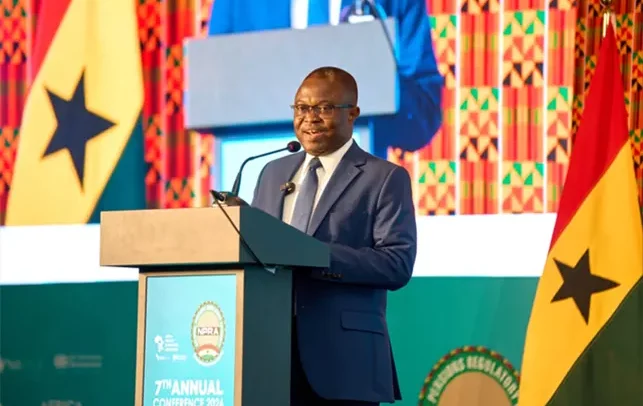
Atta Yeboah Gyan
Fidelity Bank Ghana has called for bold reforms to expand pension coverage to the country’s vast informal sector and diaspora communities, arguing that broader participation in retirement savings is essential for improving financial inclusion while generating long-term capital for national development.
The Deputy Managing Director for Operations and Support Functions of Fidelity Bank, Atta Yeboah Gyan, made the call during the 2026 Africa Pension Supervisors Association (APSA) Annual Conference in Accra.
The conference was held on the theme: “Unlocking Informal Sector and Diaspora Pensions: From Financial Inclusion to Sustainable Retirement Security.”
Addressing policymakers, regulators and pension industry leaders from across Africa, Mr. Gyan described Ghana’s pension system as facing a “coverage paradox,” noting that although the informal sector accounts for more than 80 percent of the country’s workforce, less than one percent actively contributes to the Tier One pension scheme.
He said millions of market traders, artisans, farmers, commercial drivers and head porters remained outside the formal pension system, not because they were unconcerned about retirement, but because existing pension products were designed mainly for salaried workers with predictable monthly incomes.
Mr. Gyan observed that while pension assets across Ghana’s three-tier pension system had grown to an estimated GH¢114 billion, participation had failed to keep pace with the country’s expanding workforce.
“The priority is no longer only to grow pension assets but to ensure that millions of hardworking Ghanaians have access to retirement security through products designed around the way they earn, save and live,” he said.
He also identified Ghana’s diaspora as an untapped source of pension financing, noting that remittances reached US$7.79 billion in 2025. According to him, directing just 10 per cent of those inflows into structured diaspora pension schemes could generate nearly US$780 million annually, or about US$4 billion over five years, to support long-term investment.
Mr. Gyan said digital remittance platforms already provide the infrastructure needed to make diaspora pension contributions simple and convenient.
To improve pension participation, he advocated flexible contribution models that would allow informal sector workers to save daily, weekly, seasonally or through lump-sum payments without penalties for irregular contributions.
He cited Rwanda’s Ejo Heza voluntary savings programme and Kenya’s mobile-enabled pension initiatives as examples of successful approaches that Ghana could adopt.
Mr. Gyan proposed the introduction of a dedicated diaspora pension product, pilot flexible pension schemes using mobile money platforms and the integration of pension enrolment into Ghana Card registration.
He said financial institutions have a key role to play in expanding pension coverage, pointing out that Fidelity Bank serves more than 2.2 million inclusive banking customers, many of whom operate in the informal sector.
Mr. Gyan reaffirmed the bank’s commitment to supporting pension mobilisation through its extensive customer network, digital banking platforms and international payment partnerships.