
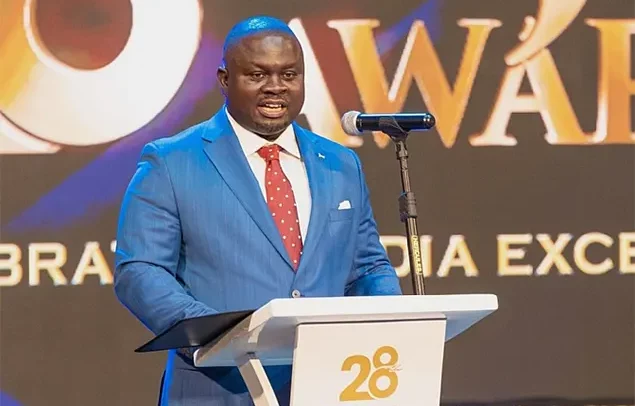
Albert Kwabena Dwumfour
The President of Ghana Journalists Association (GJA), Albert Kwabena Dwumfour, has identified the rapid advancement of artificial intelligence (AI), misinformation and disinformation as major threats to journalism and public trust.
He said although technology had transformed the way news was gathered, produced and consumed, the growing use of AI also presented new challenges for the media industry.
Mr. Dwumfour made the remarks at the 77th anniversary celebration of the GJA in Accra yesterday, held on the theme: “Building on Our Legacy, Advancing Ethical Journalism and Shaping the Future of Digital Media.”
He acknowledged AI as an increasingly important tool in modern journalism, noting that it could support journalists in research, transcription, translation, data analysis, monitoring and other routine tasks.
“AI presents enormous opportunities. It can assist with research, transcription, translation, data analysis, monitoring and other routine tasks. But it also presents serious challenges, including disinformation, deepfakes and synthetic content,” he said.
Mr. Dwumfour stressed that technology should complement rather than undermine journalism, adding that the GJA would continue to equip journalists with the skills needed to operate effectively in the digital environment.
He said the Association would strengthen training in digital journalism, fact-checking, data journalism and the responsible use of AI to ensure that journalism remained relevant and credible in the digital age.
“Technology must serve journalism; it must not destroy the values that make journalism worthy of public trust. We will therefore continue to promote training and capacity building in digital journalism,” he stated.
The GJA President also reaffirmed the Association’s commitment to defending press freedom, while reminding journalists that the credibility of the profession depended on their adherence to ethical standards.
He urged journalists to prioritise accuracy and credibility over popularity and social media metrics.
“Do not measure your success only by how many people see your story. Measure it by whether the story is true. Do not measure your influence by the number of followers you have; measure it by whether people can trust you,” he advised.
Mr. Dwumfour further announced that entries for the 30th GJA Media Awards would officially open next month.
He said, for the first time, submissions would be received through the Association’s new website as part of efforts to advance its digital transformation agenda.
The UNESCO Representative to Ghana, Edmond Moukala, also called on journalists to invest in digital skills and advocate policies that would promote the sustainability of media organisations.
He urged the media to take the lead in national conversations on the responsible use of AI, stressing the need for journalists to play an active role in shaping the future of digital media.
“The future of digital media in Ghana will not simply happen to us; it must be shaped by us,” he said.
Mr. Moukala commended Ghanaian journalists for their contribution to democratic governance, saying the media had played a central role in shaping public discourse, promoting accountability and supporting the country’s democratic development.
He, however, warned that the credibility built by the Ghanaian media over the years faced increasing scrutiny in the digital era.
“The credibility that Ghanaian journalists have built over seven decades is not a permanent inheritance. It is a debt obligation,” he said.
Mr. Moukala reaffirmed UNESCO’s commitment to supporting Ghana’s media landscape as it adapts to technological changes while maintaining the principles of ethical journalism and press freedom.
By Vera Owusu Sarpong