
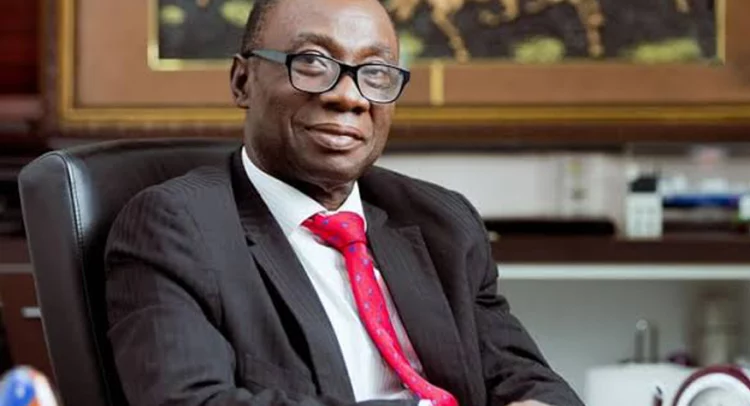
Dr. Kwabena Donkor
Former Minister for Power under the erstwhile National Democratic Congress (NDC) administration, Dr. Kwabena Donkor, has distanced himself from any involvement in the bribery scandal that led to the conviction of the former Managing Director of Tema Oil Refinery (TOR), Asante Kwaku Berko, in the United States.
Dr. Donkor, in a statement issued by his legal team, indicated that he has never met the former Goldman Sachs banker, neither demanded money from him nor received any personal benefit connected with the negotiations.
“Our client instructs us in very crystal clear language that he has absolutely no knowledge about the allegations linked to him. He completely and emphatically denies any knowledge of a request or demand for any money as alleged,” the statement said.
The statement acknowledged that Dr. Donkor was the Minister for Power for the period the alleged bribing of government officials occurred, when the government of Ghana was negotiating with Turkish company ASKA Energy to generate more electricity for Ghana during the power crisis popularly known as Dumsor.
It said a technical team comprising representatives of power sector stakeholders travelled to Istanbul, Turkey, during the negotiations to conduct what they describe as “regular practice of pre-shipment inspection.”
“According to our client, at no point in the course of this negotiation did he once set eyes on the said Mr. Asante Berko nor has he since,” the statement pointed out.
The statement further pointed out that Dr. Donkor never met Mr. Asante Berko all his life; he never discussed any personal benefit of any value whatsoever with him and “never authorised any person to discuss any such matters on his behalf; he never received any money in any denomination or any personal benefit of any value from Mr. Asante Berko or any other person.”
It also stated that any person or persons who may have made any such criminal demand in his name did so for that person or persons’ own benefit.
It added that Dr. Donkor does not understand that any evidence was led in the US trial which linked him with demanding or receiving any money, Cedis or Dollars or anything of value to him personally.
“He does not accept that evidence that some other person or persons claimed that they required money from their principals for the benefit of ‘Senior Ghana Official’ or any other title holder metamorphosed into any evidence of criminality or wrongdoing against him,” the statement added.
EOCO Probe
Meanwhile, the Economic and Organised Crime Office (EOCO) says it has commenced the process of intensifying its investigation into the Ghanaian dimension of the bribery scandal.
EOCO in a statement said it is also tracing assets, where appropriate, of individuals named in US investigations and court proceedings that led to the conviction of Mr. Asante Berko who was found guilty of bribing some government officials and Members of Parliament (MP) between 2014 and 2017.
A federal jury in Brooklyn found Mr. Asante Berko guilty of charges relating to paying more than $1 million in bribes to Ghanaian government officials in connection with the development of a power plant in Ghana.
Court documents indicate how some beneficiaries of the illicit money referred to the expected bribe as “holy rains” and were expecting it “sooner rather than later.”
Mr. Asante Berko, 52, faces up to 30 years in prison and has been remanded into lawful custody pending sentencing in November 2026.
Several individuals and Civil Society Organisations have called on the Attorney General (AG) and state institutions to pursue the matter and ensure Ghanaians involved in the bribery scandal are made to face the law.
There is already an indication of the Attorney General working with United States authorities to initiate criminal proceedings against former government officials and MPs who benefited from the bribery scheme.
The Office of the Special Prosecution (OSP) has also pointed out its involvement in the successful prosecution of Mr. Asante Berko, indicating that it provided investigation and evidentiary assistance to the Federal Bureau of Investigation (FBI) of the United States through Ghana’s established mutual legal assistance framework.
Asset Tracing
EOCO, in a statement, indicated that it closely monitored the proceedings in the United States and given the nature of the allegations and the international dimensions of the case, it considered the evidence emerging from the U.S. proceedings to be potentially material to determining the appropriate scope and direction of any comprehensive investigation in Ghana.
It pointed out that the Attorney General has subsequently directed EOCO to escalate its investigations as the relevant information and official records are obtained from the competent authorities in the United States.
“The Office will examine, where supported by evidence, whether any proceeds, benefits, assets or property may have been derived from or connected to suspected criminal conduct and where the law permits, pursue the appropriate measures for their preservation, recovery and restitution to the state,” EOCO said.
The anti-graft agency also pointed out that it intends to follow the evidence and financial trail, including any relevant transactions, beneficiaries, assets and proceeds that may fall within its jurisdiction.
It, however, emphasised that the conclusion of proceedings against Mr. Asante Kwaku Berko in the United States does not, by itself, establish criminal liability on the part of any person in Ghana.
“Any individual whose name appears in evidence obtained through the international cooperation process will be assessed independently on the basis of the evidence relevant to that person and in accordance with Ghanaian law,” it stated.
EOCO assured the public that its collaboration with U.S. law enforcement authorities and the Attorney General’s Office remains active, adding that it will not disclose sensitive operational information that could compromise ongoing investigations, the integrity of evidence or any future prosecution.
“EOCO remains committed to following the evidence without fear or favour, identifying and investigating economic and organised crime within its mandate, and pursuing the recovery of assets and public resources where the evidence and the law so require.”
BY Gibril Abdul Razak