
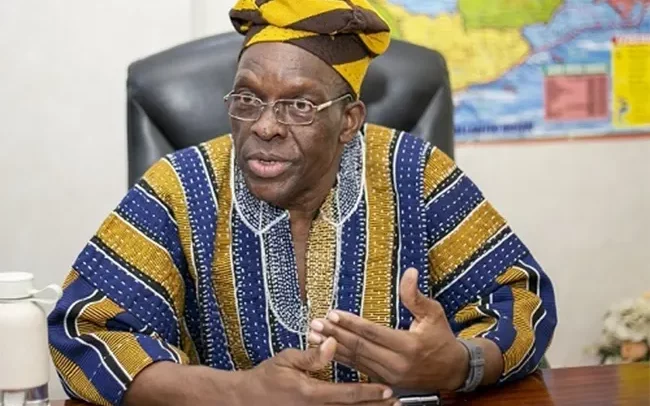
Alban Sumana Kingsford Bagbin
The Speaker of Parliament, Alban Sumana Kingsford Bagbin, has called for an end to the practice of individuals and groups marching to Parliament in large numbers to present petitions, insisting that such submissions must be made through a Member of Parliament (MP).
He said the established parliamentary procedure requires citizens seeking to petition the House to approach an MP to facilitate the presentation of their petitions, rather than submitting them directly to the Speaker.
Addressing the House yesterday, Mr. Bagbin said the clarification was necessary to ensure that both MPs and the general public became familiar with the procedures governing the presentation and consideration of petitions.
“To at least bring to a halt the current practice of people marching, coming to Parliament in their numbers to present petitions,” he said, while explaining why he had decided to draw attention to the relevant provisions of Parliament’s Standing Orders.
He cited Order 99, Rule 1, which allows an MP to present a petition to the House after notifying the Speaker, and Rule 2, which provides for a petition to be presented by a Member, either personally or on behalf of another person, on a matter of personal nature or public concern.
Mr. Bagbin stressed that the petitioning process was an important instrument of parliamentary democracy, accountability and public engagement, providing citizens, civil society organisations and other groups with an opportunity to bring their concerns before Parliament.
He explained that the process was not limited to matters of national significance or general public policy, as individuals could also petition Parliament over personal grievances, subject to the applicable procedural requirements.
The Speaker outlined the basic requirements for presenting petitions, including that they must be written and dated, signed or thumb printed by the petitioner, and clearly state the petitioner’s name and address.
He said petitions must also identify the subject matter and the relief being sought, in addition to complying with the prescribed format under Parliament’s Standing Orders.
Mr. Bagbin encouraged citizens, professional bodies, community groups and civil society organisations with legitimate concerns requiring parliamentary attention to familiarise themselves with the procedures and engage their MPs to facilitate the presentation of petitions.
He also urged MPs to take a more active interest in the process, describing it as an important aspect of their representative responsibilities.
The Speaker further directed the Committee on Petitions to undertake an immediate review of all petitions pending before it and expedite their consideration before submitting the necessary reports and recommendations to the House.
He said the committee was expected to compile a comprehensive record of outstanding petitions, indicating their dates of referral, subject matters and current status.
The committee was also instructed to prioritise petitions that had remained outstanding beyond the period stipulated under Order 99, Rule 6, conclude pending investigations and submit its reports without further delay.
Mr. Bagbin said arrangements should also be made to ensure that future petitions referred to the committee were investigated and reported on within timelines set by the Speaker.
Beyond addressing the backlog, he called for a comprehensive review of the operation and effectiveness of the petitioning mechanism, expressing the expectation that the Standing Orders Committee would take appropriate action.
He also urged the Parliamentary Service, working with the Committee on Petitions and relevant departments, to develop public education programmes to make the process more accessible and understandable to ordinary Ghanaians.
He proposed the use of parliamentary television, digital communication platforms, civil society engagements and constituency-level activities to educate the public on how to petition Parliament.
Mr. Bagbin said the petitioning process must not remain a procedure known only to MPs, parliamentary officials and a few civil society organisations, but should become a recognised avenue through which ordinary citizens could bring legitimate concerns before the House.
By Ernest Kofi Adu, Parliament House