
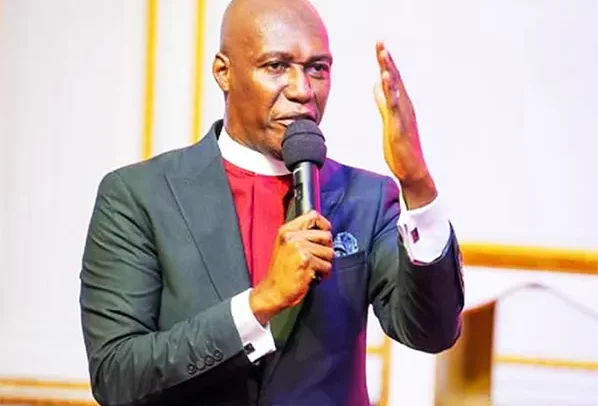
Prophet Kofi Oduro
The liberation theology concept used to be applicable in some parts of the world in the 50s and 60s.
The clergy served effectively as the conscience of the oppressed, championing their cause by so doing.
At a time when some parts of Africa were under the yoke of colonial subjugation, the doctrine was in full flight; undaunted, pushing for the liberation of the oppressed.
The concept could have started in Latin America, especially Peru, where the vulnerable poor needed supporting voices to lift them from their state of hopelessness.
In the US, the segregation along racial lines made worrying headlines in instances where physical exhibition of the obnoxious practices led to clashes.
In Africa, especially the Southern part of the continent, men of God, decent and highly revered stepped in to render the necessary support to their compatriots in the trenches of the liberation struggle.
In Ghana, some clergymen supported the struggle for independence in their own peculiar ways.
In post-independence Ghana, especially when junta politics which eventually birthed the National Democratic Congress (NDC), the many traits of the military dictatorships inherited by the party were not glossed over by the strong voices of the Catholic Bishops Conference, the Presbyterian Church of Ghana and the Methodist Church. They have remained for us the nation’s voice of conscience. They did not spare the New Patriotic Party (NPP) when the grouping was in government.
They have remained unwavering in their principles at a time when some so-called neutrals have been defrocked, their political inclinations revealed shamefully.
In the period close to the 2024 polls, there was a heightened clamour for regime change by some church leaders in the unorthodox fold. Using the pulpit to cover their lineages and bias, they laid out their agenda without noticing their nakedness.
Theirs is not the liberation theology activated to improve the lot of the oppressed but to rather advance their selfish interest.
Some of the pastors have not been able to convince Ghanaians about their neutrality on the pulpit.
There is a man of God who before the assumption of power by the NDC chastised the political leadership of the country using harsh references to do so for not living up to expectation. He did so with a seeming passion to serve the interest of Ghana. Not so however, emerging traits in him having showed.
The then President Akufo-Addo was at the receiving end of his endless verbal attacks on the pulpit in the run-up to the last general election.
We do not all have to belong to the same political party, that of course would be contrary to the principles of multiparty democracy, which we as a nation have subscribed to.
Some occupations however demand that those who are in them adhere to unwritten conventions, such as not openly hostile to a political lineage using subterfuge because of a hidden agenda.
Doing so would constitute an abuse of the position those engaged in the aberration hold.
Those who belong to civil society organisations (CSOs) must not be seen to be aligned to political parties in their advocacies and commentaries.
In the recent instances of power outages to hit the country, the man of God vented his angst against his compatriots who are complaining about the trend.
They are foolish who do not commend the government for the restoration of power supply to the country, he was recorded as telling Ghanaians. Put alternatively, he insulted Ghanaians, and that was not the first time he did so.
We wish to admonish the clergyman, if indeed he is one, that decency of language would serve his interest of protecting the incumbent government than spewing such unacceptable language.