
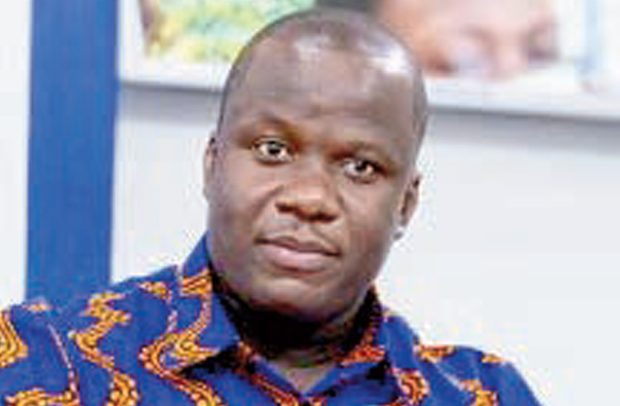
Samuel Abu Jinapor
The Member of Parliament (MP) for Damongo, Samuel Abu Jinapor, has questioned the policy rationale behind the government’s decision to operationalise regional tribunals, arguing that Ghana’s existing judicial system has effectively served the country throughout the Fourth Republic.
Contributing to the debate on the principles of the Tribunals Bill, 2026, after its second reading by the Attorney General and Minister for Justice, Dr. Dominic Ayine, Mr. Jinapor said while the Constitution empowers Parliament to establish the jurisdiction of regional tribunals, the government had failed to justify why the country needed them now.
He acknowledged that the Attorney General was acting within the law by sponsoring the bill.
“Article 143 of the Constitution mandates Parliament to prescribe the jurisdiction of regional tribunals and offences against the state and the public interest. Therefore, the Attorney General is very much on firm grounds to be sponsoring this bill,” he said.
However, he maintained that constitutional authority alone was insufficient justification for reviving a judicial institution that had largely remained dormant under the Fourth Republic.
“What is the policy rationale for this great attempt to have regional tribunals? Why must we have regional tribunals now when throughout the life of the Fourth Republic we have done well with the existing judicial structures?” he asked.
Mr. Jinapor noted that the country’s justice delivery system had successfully relied on Magistrate and District Courts, Circuit Courts, High Courts, the Court of Appeal and the Supreme Court for more than three decades, questioning the need to introduce another layer of adjudication.
He said regional tribunals had never been a fundamental feature of the Fourth Republic’s judicial architecture and wondered why Parliament was being asked to pass an extensive law to operationalise them.
The Damongo MP also recalled what he described as the painful history of regional tribunals during military rule, arguing that they remained associated with injustice in the minds of many Ghanaians.
“Regional tribunals in our country have a history, and I want to submit most respectfully that the history is not pleasant. Many Ghanaians have had very terrible experiences when it comes to regional tribunals,” he stated.
According to him, the tribunals of the past dispensed justice in a manner that resulted in serious injustices, with proceedings in which judges’ identities were concealed.
He urged Parliament to be guided by the country’s constitutional history, describing the Constitution as “a living organism” that embodies both Ghana’s history and aspirations.
Although he acknowledged the Attorney General’s clarification that regional tribunals operated during the early years of the Fourth Republic under former President Jerry John Rawlings, Mr. Jinapor insisted they had never become an integral part of Ghana’s judicial system.
Instead of reviving regional tribunals, he urged the government to channel resources into strengthening the existing High Court system.
Citing the committee’s report that indicated the tribunals would help clear about 3,360 backlog cases, he argued that the same objective could be achieved by increasing the capacity of the High Courts.
He called for the appointment of more judges, additional judicial staff, improved logistics, greater investment in technology and the expansion of fast-track court systems to accelerate the administration of justice.
“Why can we not strengthen the existing High Court, retool it, get more judges, provide more logistics and clear this backlog of cases?” he asked.
AG Response
Responding to the concerns, Attorney General and Minister for Justice, Dr. Dominic Ayine, acknowledged that the public tribunals established during the Provisional National Defence Council (PNDC) era had been associated with excesses and allegations of human rights abuses.
He, however, assured Parliament that the proposed tribunals would operate strictly within the safeguards of the 1992 Constitution and would be fundamentally different from those of the past.
He said the bill provides for a Tribunal Oversight Committee, operating under the Judicial Council, to monitor the work of tribunals and prevent any abuse of power.
Dr. Ayine disclosed that he had proposed decentralising the oversight committee by establishing regional committees to monitor tribunal operations and report any misconduct to the Judicial Council and the Chief Justice.
He stressed that the objective of the bill was to promote the expeditious administration of justice, broaden citizens’ participation in the justice delivery system as envisaged by Article 125 of the Constitution, and complement, not replace, the existing courts.
The Attorney General rejected suggestions that the revival of tribunals was intended to resurrect the politically controversial public tribunals of the past or target members of any political party.
“I want to assure every Ghanaian that bringing back or operationalising the tribunals does not in any way resurrect the ghosts of the past,” he said.
Bill Memorandum
According to the memorandum accompanying the bill, the proposed legislation seeks to establish a comprehensive constitutional and statutory framework for the operation of tribunals, clarify their jurisdiction and procedures, reduce case backlogs, promote access to justice and ensure greater public participation in the administration of justice while embedding robust safeguards to protect human rights and uphold due process.
By Ernest Kofi Adu, Parliament House