
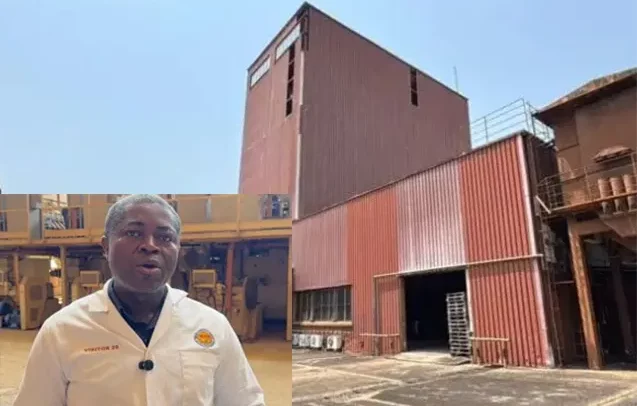
Premises of WAMCo one. INSET: Dr Boakye Danquah
The West Africa Mills Company (WAMCo), a cocoa processing company in the Western Region, has appealed to the government to help rehabilitate its second processing plant at Sekondi also called WAMCo 2.
According to the company, the revival of WAMCo 2 would enable it take full advantage of the recently introduced 50 per cent cocoa retention policy by the government.
The policy directs that at least 50 per cent of Ghana’s cocoa beans should be processed locally.
WAMCO, established in 1949 remains the first local cocoa processing company in the country.
The government, through the Ghana Cocoa Board (COCOBOD), holds a 40 per cent stake and it operates two facilities — WAMCO One and WAMCO Two — with a combined production capacity of about 60,000 metric tonnes.
However, only WAMCO One is currently operational and even that facility is operating at about 30 per cent capacity due to limited supply of cocoa beans.
The Deputy Managing Director of WAMCo, Dr. Boakye Danquah, noted that revamping of WAMCo two, would significantly increase local cocoa processing and strengthen Ghana’s value addition drive.
He regretted that the Sekondi-based plant, which has a processing capacity of 30,000 metric tonnes, had remained redundant for years due to technical challenges and inadequate supply of raw cocoa beans.
“So we call for the support of the government and any other investor who is ready to invest in WAMCo two to help increase the processing capacity and create more jobs,” he added.
According to him, the company requires an investment of between $5 and $7 million to retool the facility and restore it to full operational capacity.
He noted that reviving the plant would not only boost cocoa processing but also contribute to the economic revitalisation of Sekondi-Takoradi and create more jobs.
The Managing Director of WAMCO, Frank Bednar commended the government for its decision to implement the 50 per cent cocoa retention policy.
“This is a major step towards promoting local value addition,” he added.
He said increased local processing of cocoa would help Ghana generate higher export revenues while creating sustainable jobs in the industry.
He mentioned that the more the company gets cocoa beans for processing, the more it would create jobs.
From Emmanuel Opoku, Takoradi