
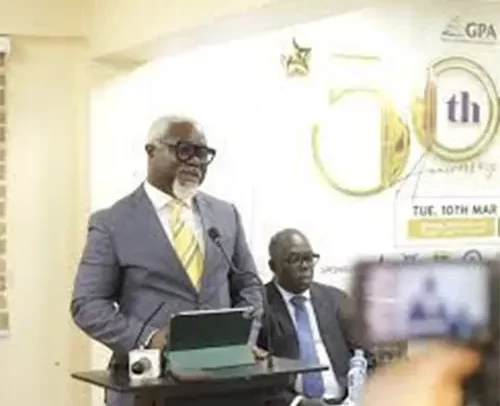
The Ghana Publishers Association joins UNESCO and the global community to commemorate World Book and Copyright Day 2026, which falls on 23rd April, under the theme, “The Joy of Reading.”
Commemorating the day, Edward Yaw Udzu, Esq., President, Ghana Publishers Association (GPA), said the theme challenges the association to renew its collective commitment to building a strong and enduring reading culture, especially among children and young people.
He added that Ghana has made commendable progress in literacy over the past two decades. According to UNESCO data, adult literacy levels have risen significantly—from about 58 per cent in the year 2000 to over 80 per cent by 2020. This progress he said reflects sustained investments in education and access.
“However, national averages do not tell the full story. Reading proficiency challenges persist, particularly among schoolchildren and underserved communities. UNESCO rightly describes literacy as a cornerstone of human empowerment—enabling individuals to access knowledge, participate meaningfully in society, and improve their quality of life,” he said.
Yaw Udzu added that evidence from literacy initiatives in Ghana confirms the transformative power of reading. UNESCO-recognised programmes such as Libraries Without Walls have reached thousands of learners and significantly improved reading ability and confidence within a short period.
He added that these experiences demonstrate that when children have access to books and welcoming reading environments, progress follows swiftly.
In Ghana, community-based literacy programmes have contributed directly to socio-economic empowerment, particularly among youth and marginalised groups. Literacy enables individuals to participate in income-generating activities, engage in local economies, and innovate within their communities.
Yaw Udzu added that building a knowledge-based economy depends on a population that can read, understand, and apply information effectively. “Without strong reading skills, educational investments yield limited returns, workforce productivity declines, and economic growth is constrained. A reading nation, however, builds skilled human capital, fosters innovation, and sustains economic progress,” he added.
He further indicated that despite gains made by the association, significant disparities remain, saying, “Illiteracy rates are higher among women and rural populations, and in some communities, access to books and libraries remains severely limited. Addressing these challenges requires coordinated national action.”
He therefore called for increased investment in libraries and reading infrastructure, stronger support for local publishing and book distribution, promotion of reading in Ghanaian languages, and the integration of reading for pleasure into school systems.