
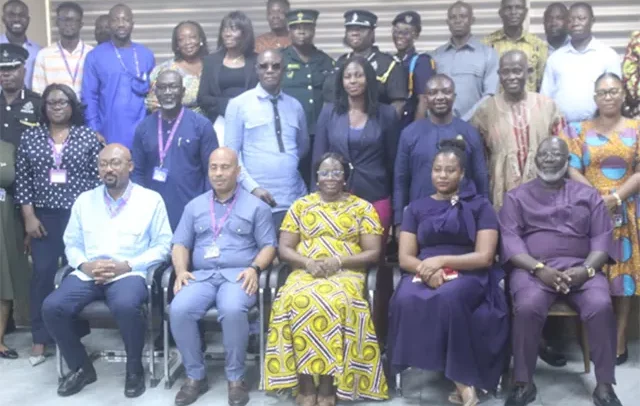
Participants at the workshop
The Volta River Authority (VRA), on Tuesday, held a stakeholder workshop on its Emergency Preparedness Plan (EPP) and Environmental Management Plan (EMP) for ten districts identified as potentially vulnerable to emergencies related to the Akosombo and Kpong dams.
The workshop, which brought together officials of the Volta River Authority, District Chief Executives, members of the regional Security Council, is aimed at providing participants an understanding of the Emergency Preparedness Plan framework, with a particular focus on inundation maps and flood risks associated with both existing developments and proposed projects in flood-prone areas.
Speaking at the opening session in Accra, the Greater Accra Regional Minister, Linda Ocloo, said the training would equip stakeholders with the knowledge required to guide planning decisions, mitigate risks, and strengthen community resilience.
The minister, who described the initiative as a demonstration of strong commitment to proactive engagement and local-level preparedness, also commended the VRA for consistently organising annual workshops for the affected districts.
According to her, the Emergency Preparedness Plan which includes annual engagements in each of the affected districts to educate stakeholders, review procedures, test response capabilities, and information on relevant data, serves as a critical blueprint for responding to potential emergencies at the Akosombo and Kpong hydroelectric plant.
She said the engagements are vital for building local capacity and fostering resilience within the communities, ensuring that the operations of the hydro plants are carried out in a sustainable and environmentally responsible manner as well as provide opportunity for stakeholders to learn strategies to protect their respective communities.
Madam Ocloo assured officials of VRA of the Regional Coordinating Council’s commitment to support the effective implementation of the Emergency Preparedness Plan to enable them manage the challenges they face during such emergencies.
By Ebenezer K. Amponsah