
When global climate negotiations open in Antalya this November, they will be presided over by an arrangement that has few precedents in the history of the UN climate process: one country hosting the conference, and another leading the negotiations, as equal partners.
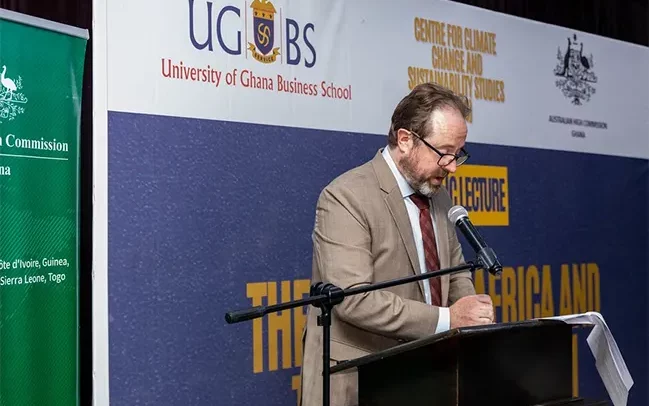
That arrangement, between Türkiye and Australia, was the subject of detailed explanation at a public lecture held on 8 June 2026 at the University of Ghana, organised by UGBS, C3SS, and the Australian High Commission. For many in the audience, it was the first time the mechanics of the COP31 co-presidency had been laid out in a Ghanaian setting.
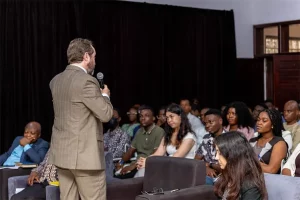
H.E. Dilara Cesar, Deputy Ambassador of the Embassy of the Republic of Türkiye in Ghana, described the partnership as both a practical and symbolic choice. “We consider this responsibility not only a reflection of our commitment to multilateralism,” she said, “but also as an opportunity to help restore confidence in the global climate regime at a time when trust is under strain.”
The division of labour is clear. Türkiye will serve as COP31 President and host the conference in Antalya from 9 to 20 November 2026, including the World Leaders Summit on 11 and 12 November, and will lead the Climate Action Agenda. Australia will serve as President of Negotiations. H.E. Cesar described the model as one guided by three core principles: dialogue, consensus, and action.
The Australian High Commission, for its part, framed its role as facilitator rather than director. The Commission’s representative was clear that the function of the Presidency of Negotiations is to build consensus across parties, not to impose outcomes. Australia is approaching its mandate with a stated emphasis on transparency, inclusiveness, and real-world results.
For Africa, the significance of this arrangement lies in who is in the room. Both co-presidents have included vulnerable regions, among them Africa and the Pacific, explicitly in their stated priorities. H.E. Cesar noted that the COP31 Presidency is ready to support efforts to increase the adaptation capacity and resilience of the African continent, and that Africa’s adaptation and resilience priorities will remain central to its approach.
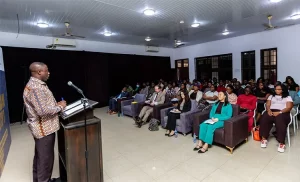
The lecture at UGBS was itself a product of this diplomatic footprint. Convening students, researchers, and civil society stakeholders in Accra ahead of COP31 is part of how the Australian High Commission is executing its responsibility as President of Negotiations: by listening before the negotiations begin.