
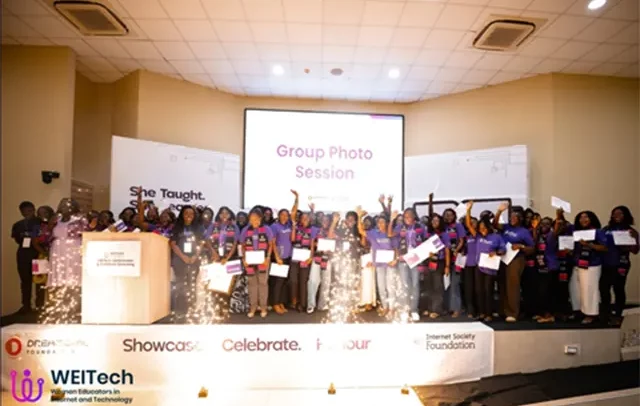
A moment during the graduation ceremony
One hundred female educators have graduated from the Women Educators in Internet and Technology (WEITech) programme, emerging as certified digital educators equipped with the skills, confidence, and practical experience to thrive and contribute to Ghana’s growing digital education ecosystem.
Implemented by the DreamOval Foundation with support from the Internet Society Foundation and in collaboration with ecosystem partners, including the Ghana EdTech Alliance and Dania Williams LBG, the programme was designed to equip female teachers with digital literacy, educational technology, artificial intelligence (AI), and entrepreneurial skills to improve employability and bridge the digital gender gap in education.
The Convocation and Exhibition Ceremony held on June 17, 2026, under the theme, “She Taught. She Learned. She Led: Celebrating Women Educators Who Went Beyond the Classroom,” marked the culmination of months of intensive training, mentorship, entrepreneurship development, and Educatinal Tecnology (EdTech) industry placements.
A major highlight of the event was the exhibition of 12 participant-led EdTech solutions addressing challenges in teaching, learning, content creation, assessment, and teacher professional development.
The projects reflected the practical application of the skills participants acquired throughout the programme and demonstrated how technology can be leveraged to improve educational outcomes.
Throughout the programme, participants received training in AI applications, digital literacy, educational technology, online presence development, content creation, and entrepreneurship.
They also completed EdTech understudy placements with organisations within the Ghana EdTech Alliance network, gaining practical industry experience and exposure to emerging trends shaping the future of education.
Speaking at the graduation ceremony, the Executive Director of DreamOval Foundation, Afua Oforiwaa Asiamah-Adjei, reflected on the programme’s vision and the transformation of participants.
“Today is proof that when women are given access to the right opportunities, skills, and support systems, they become innovators, entrepreneurs, digital leaders, and changemakers,” she said.
She pointed out that, “The projects exhibited here demonstrate that these women are not only consuming technology; they are creating solutions that can transform education in Ghana.”
Madam Asiamah-Adjei further announced seed funding support for all 12 exhibition teams to continue developing their innovations beyond the programme.
“We did not want these ideas to end here. Every team exhibiting today will receive seed funding to further develop their solutions because innovation deserves opportunity, and we believe these women have the potential to build solutions that can create lasting impact across our education sector,” she noted.
The Internet Society Foundation, whose support made the programme possible, in its message emphasised the importance of partnerships in creating sustainable digital inclusion opportunities for women.
“The WEITech programme stands as a powerful example of what is possible when organisations come together with a shared commitment to empowering women through digital skills, education, and innovation,” Celia Gueto Melo, Associate Program Officer at the Internet Society Foundation said.
She added that, “Through this programme, participants have not only gained technical knowledge but also built confidence, expanded opportunities, and positioned themselves as leaders and changemakers within their communities.”
The ceremony also recognised Deborah Danquah of Cohort Three as the 2026 WEITech Valedictorian. Her capstone project, LucidScript, an AI-powered essay practice platform that provides instant curriculum-aligned feedback to students, was among the innovative solutions showcased during the exhibition.
The graduation of the 100 educators reflects the growing potential of women educators to lead innovation, drive digital transformation, and contribute meaningfully to Ghana’s evolving education and technology sectors.
BY Gibril Abdu Razak